For a long time now, I’ve been convinced that if workplace professionals want to make a difference in this age of experience then we’ll need to consider different skills, outlooks, models in the work we do.
My career has been split in two. The first half was spent at the Chartered Institute of Marketing where I was lucky enough to rub shoulders with some of the greatest marketing thinkers of the last half century. I went on to study it and was totally mesmerised by some of the theories that sit behind the engagement you have with household brands every day.
The second half of my career has been spent in the ‘workplace’ arena and throughout that whole period I’ve looked at the challenges they faced and couldn’t help thinking that some of the ideas I was exposed to in marketing could help them because at the end of the day it was about understanding, influencing and changing perception, experience and engagement.
And the noise about ‘earning the commute’ and RTO’s has only reinforced that. Because what we’re talking about here is what marketers would call ‘the value exchange’.
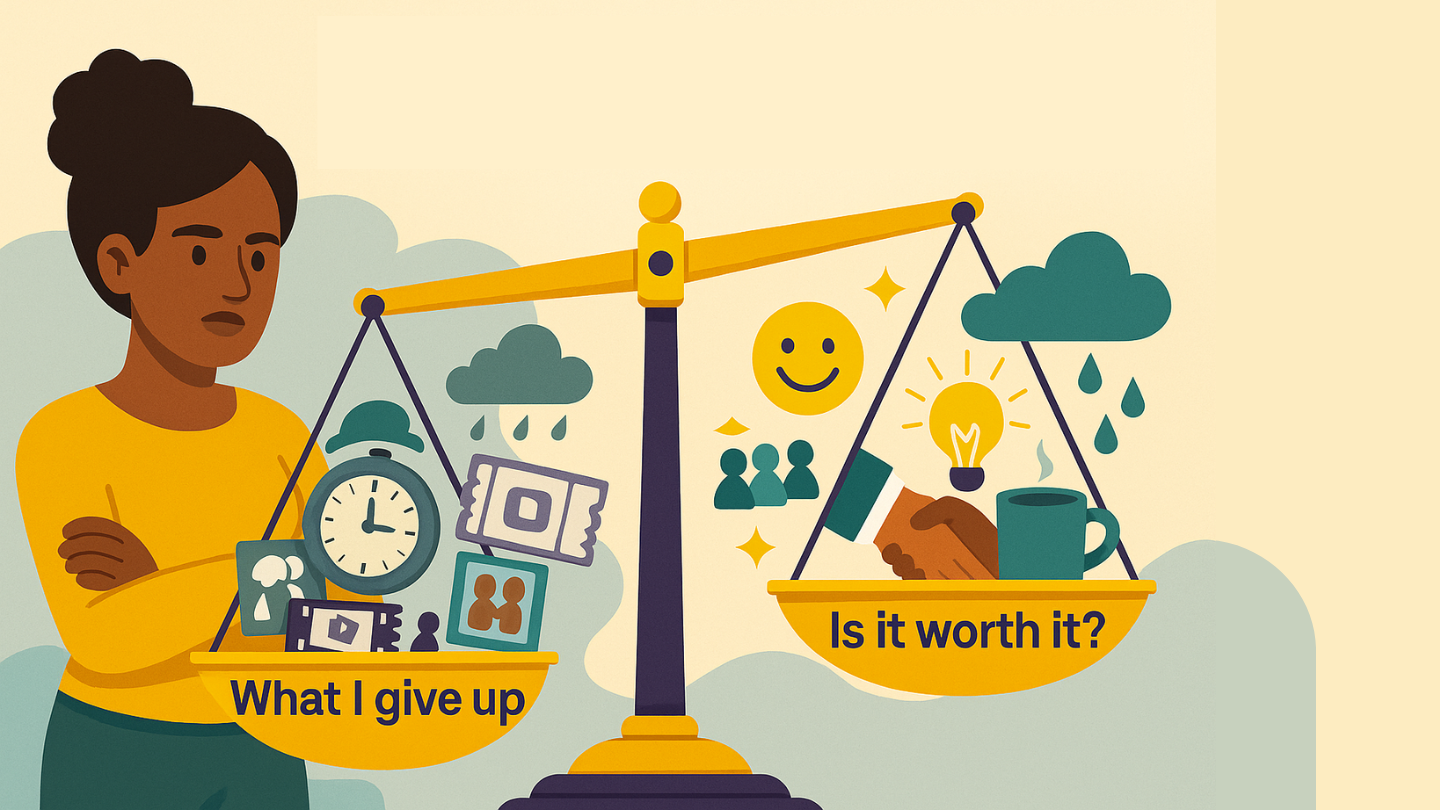
The idea of a value exchange isn’t new — in fact, it’s one of the foundational concepts in marketing thinking. It dates back to the 1950s with people like Peter Drucker, and later Philip Kotler, who framed marketing as more than just selling; it was about understanding people’s needs and facilitating an exchange that felt worthwhile to both sides. At its simplest, value exchange is the balance between what someone gives up — their time, money, or effort — and what they get in return.
You see it play out in small decisions every day. Take buying a coffee on your commute — you hand over £3 and a few minutes of your time, and in return you get warmth, taste, a caffeine hit, and maybe even a comforting routine. If the experience feels worth the sacrifice, you’ll probably do it again tomorrow.
Over time, that thinking has evolved. By the late 90s and early 2000s, thinkers like Morris Holbrook started expanding the idea beyond purely transactional exchanges. They argued that value wasn’t just created by organisations and delivered to people — it was actually co-created through experience, perception, and emotional connection. Think about something like volunteering for a cause you care about. The "sacrifice" might be your free time or energy, but the return — a sense of purpose, belonging, or contribution — is deeply personal and often more meaningful than anything material. That shift matters, because it moves the conversation from what something is to how it feels and what it means to the individual. It’s a principle that marketers have applied for years — and one that, I’d argue, workplace professionals could benefit from exploring too.
And this is where I think the idea of value exchange becomes particularly relevant for those of us working in the workplace experience space — especially in the context of return-to-office (RTO) mandates. The dynamics have shifted. Before COVID, coming into the office wasn’t really seen as a choice. It was just part of the job — a default setting that rarely got questioned. But the pandemic broke that routine. It introduced a new model where people experienced autonomy, flexibility, and a rebalancing of work and life. Now, being asked to return to a physical workplace feels different. It feels like a decision. And with that shift, the commute — and everything that comes with it — starts to look a lot more like a sacrifice.
So, the question for organisations is: what are people getting in return? If someone is giving up an hour of their day to travel, spending money on tickets or fuel, arranging childcare, or sacrificing time with their family — then what’s on the other side of that exchange? What makes it feel worth it? If the workplace experience amounts to little more than sitting on video calls all day at a different desk, the value doesn’t stack up. But if they’re gaining something they can’t get elsewhere — meaningful connection, collaboration, energy, inspiration, a sense of purpose — then it starts to feel like a fair trade. That’s the challenge. And I think it’s one that workplace professionals are well-placed to take on, if we’re willing to apply a slightly different lens.
This is why I worry about RTO mandates — even the more “flexible” versions that only require a few days a week. I can’t help but wonder if, by removing some of the choice, organisations risk letting themselves off the hook when it comes to creating genuinely compelling workplace experiences. For a while, we heard a lot of talk about “magnets not mandates” — about making the office a place people want to come to. But increasingly, the tide seems to be turning toward mandates. And if that becomes the default, will the energy, investment, and attention shift away from experience?
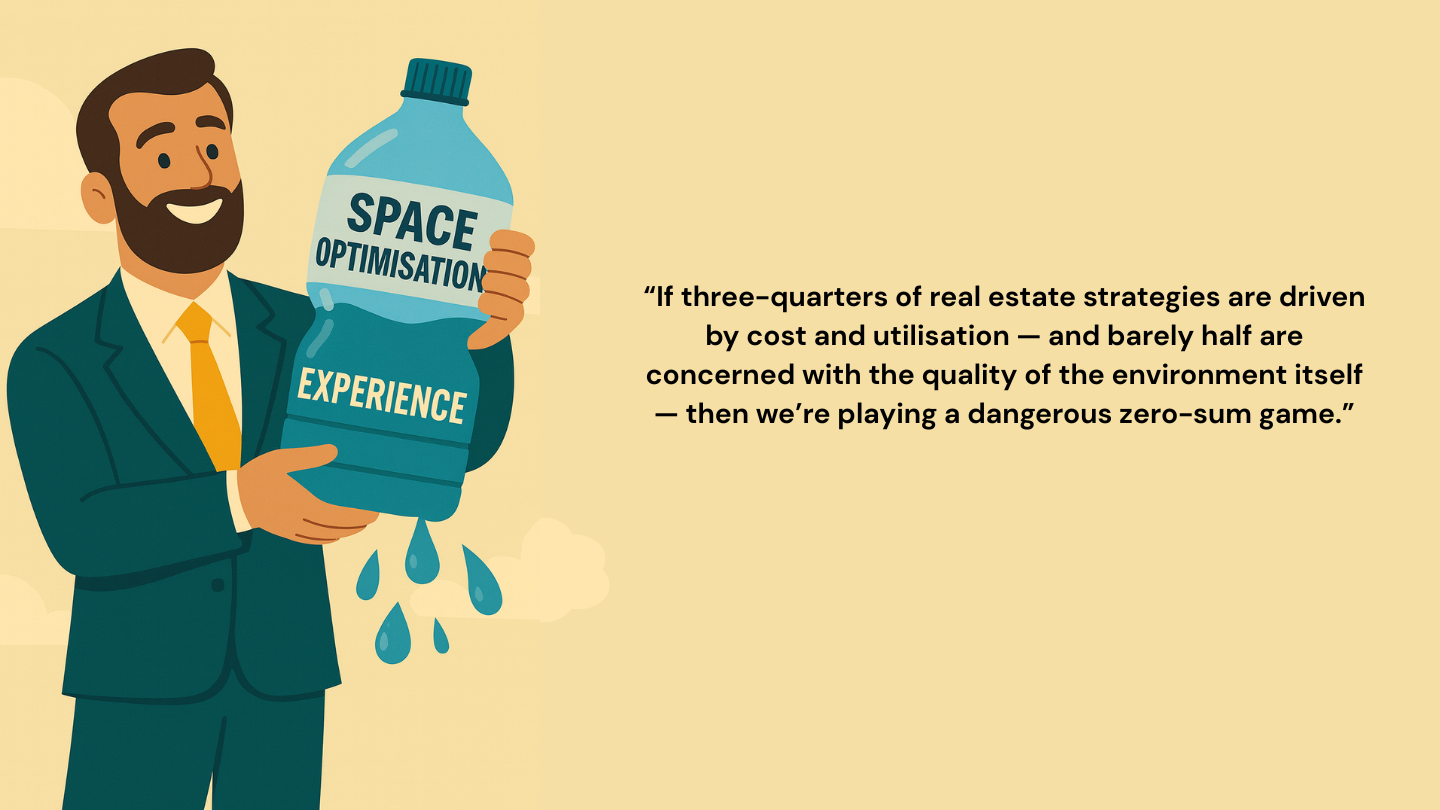
I’ve written before about the impact that shrinking space and increasing density will have on the quality of that experience — and that is more likely as mandates start to creep into the market.
So what do we do?
The advice I give to Audiem clients is to lean into the mandate — if the decision has been made, don’t dance around it. Be clear, be honest about why, and wherever possible, root the rationale in tangible performance data. But then — and this is the important bit — mitigate the impact. Understand the nature of the sacrifice employees are making and why it matters. Learn what they perceive as valuable in their workplace experience and design for that (within reason, of course).
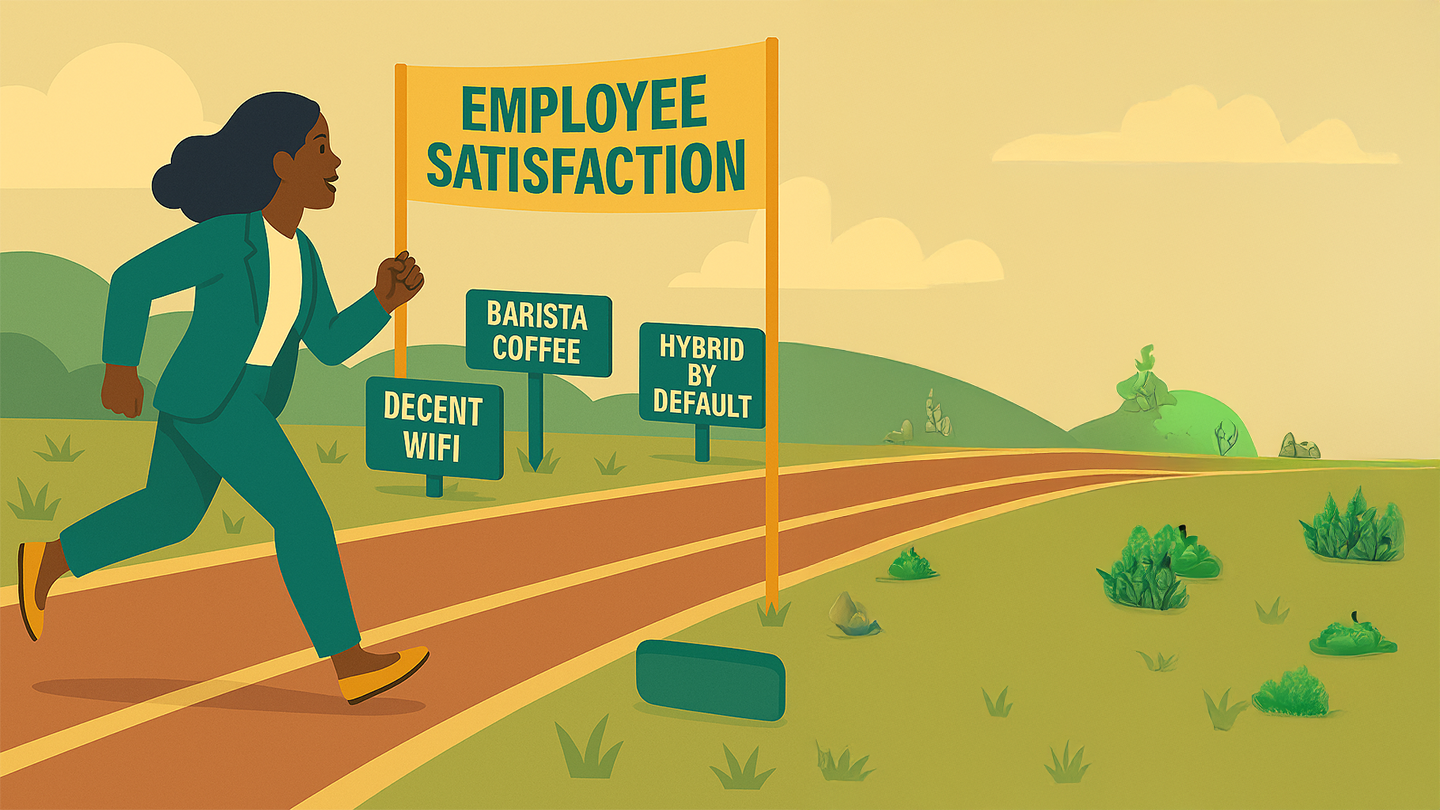
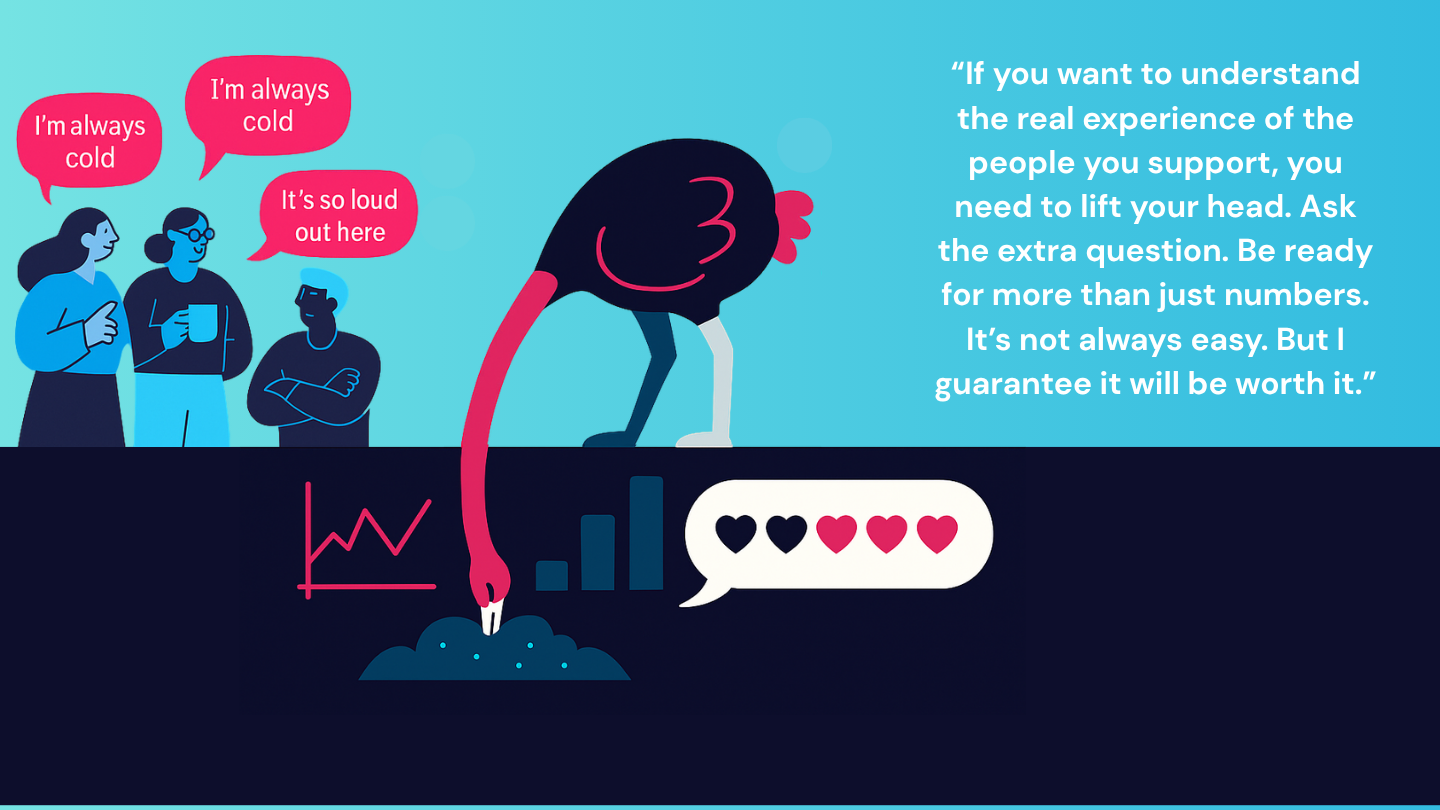
Because here’s the thing — this stuff is nuanced. It’s emotional, subjective, and, frankly, messy. What feels like a worthwhile experience to one person might feel like a raw deal to someone else. The impact of the sacrifice — be it the lost time, the added stress, or the simple disruption to a routine — is deeply personal. And the reasons people find value in their workplace can be just as individual. That’s why a simple tick-box satisfaction rating isn’t going to cut it.
The route to a balanced, meaningful value exchange lies in understanding the why behind the experience. It’s in the stories, not just the scores. That means listening — properly — and building a picture that reflects the richness of how people actually feel. That’s what qualitative data does best. And if you want help finding that insight, you know where to find us.