The conversation.
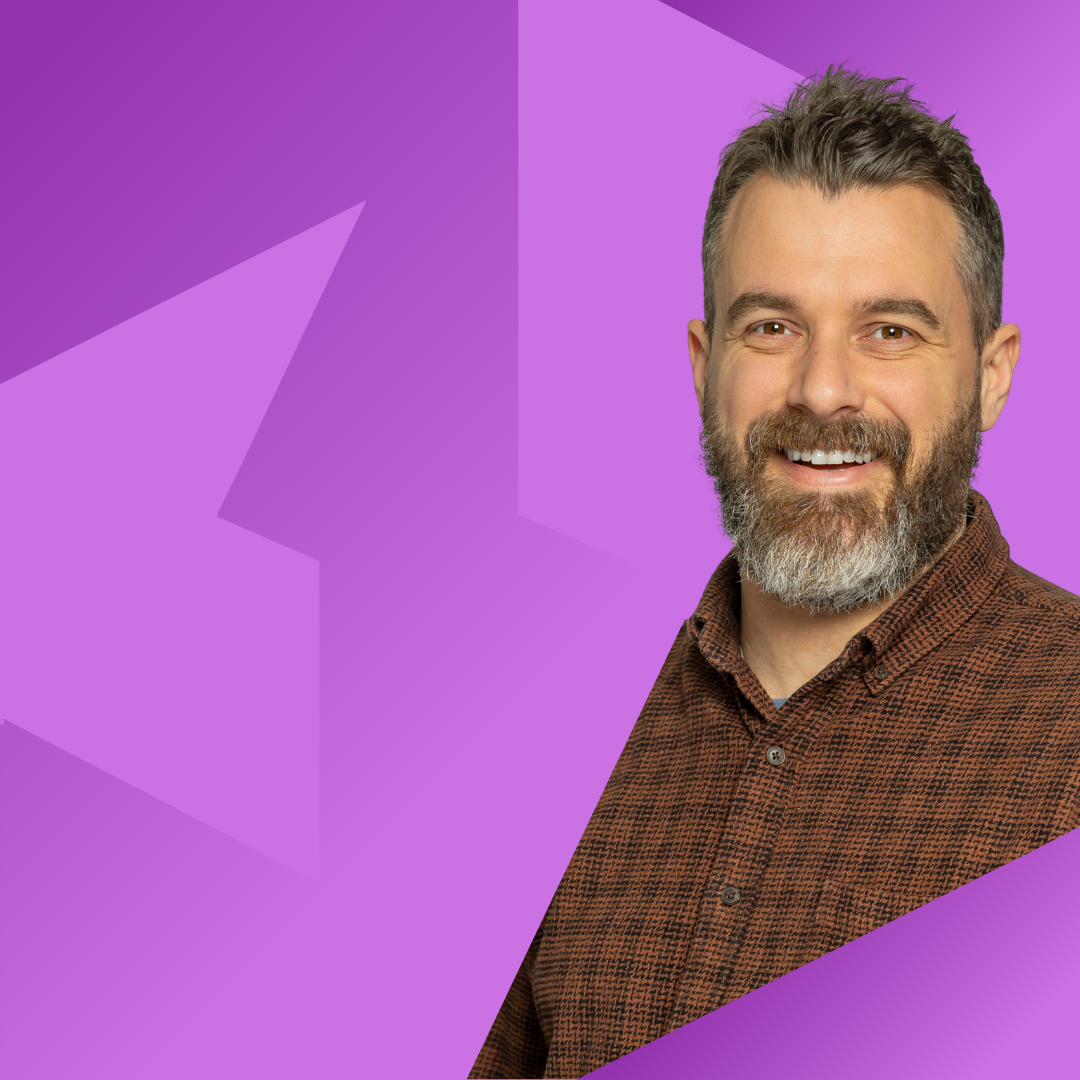
How do we find room to act when everything seems to be changing at once? Act Two of this series opens with Sam Conniff, author of Be More Pirate and co-founder of Uncertainty Experts, to explore our relationship with uncertainty and what it means for the decisions we make at work.
Sam describes a revealing question from his research: would you rather look decisive if it led to a bad outcome, or tolerate looking indecisive if it led to a good one? The responses open up a conversation about the expectations organisations create, the discomfort of not knowing, and what we recognise as strong leadership.
From there, Chris and Sam explore the different ways people describe the uncertainties ahead of them, including what they believe they can influence. AI brings these questions into everyday working life: how can the same technology look like an opportunity to one person and a threat to another?
The conversation leaves room for optimism, connection and a little productive procrastination. It also raises a question that carries through this next act: how might getting more comfortable with uncertainty help us find a greater sense of agency?
Explore further
We discuss
- Why uncertainty is an emotional experience as well as a planning problem.
- The pressure to look decisive and the behaviours organisations reward.
- How people describe the systems around them and what they can influence.
- Different responses to AI, and the space for human judgement alongside it.
- Connection, optimism and the possibility of productive procrastination.
Explore further
Read the transcript
-- INTRO --
Chris Moriarty
Hello and welcome back to Workplace Geeks. I'm your host, Chris Moriarty. Now we've had a little break and we are back now for act two of this series, a short sprint of five episodes. Before we take another moment to pause and reflect in act one, we explored some of the forces changing work and challenged a few assumptions about where it's all headed.
Chris Moriarty
This next set of conversation asks How do we live through that transition? How do we work, lead, and make decisions when so much is changing around us all at once, which makes Sam Conniff a rather good person to start with. Longstanding listeners will remember Sam from season one joining us to talk about Be More Pirate and his early work, exploring Uncertainty.
Chris Moriarty
We then spoke to partner in crime and cognitive scientist, Katherine Templar Lewis, about the Science Behind Uncertainty Experts, the project that they developed together. Well, quite a lot has happened since those conversations. Their work has grown and, and so has their family. Sam and Katherine actually married since we last spoke to 'em and welcomed a little one into the world.
Chris Moriarty
So you'll hear Sam reference Katherine a fair bit during this and their relationship and how that developed, uh, as well as their work. So just wanted to get you up to speed with a little bit of geeks history there. Now, the work, as I say, has evolved and it has taken an into a fascinating question. Why do we sometimes put more value on looking decisive than making a good decision?
Chris Moriarty
We get into what uncertainty does to us, how that shows up in leadership and why AI might be bringing some very human habits into sharper focus. But running through it is an encouraging idea. Our tolerance of uncertainty is something we can develop. So with that and more, here's Sam.
-- INTERVIEW --
Chris Moriarty
Sam, welcome back to the Workplace Geeks Podcast because you've, you've been with us before. And do you know what I got as we were approaching this interview? I got really excited because I thought that you might be the first guest to win the Hat Trick Ball. I thought this was your third appearance and it's not.
Chris Moriarty
I was mistaken. I've gone and looked this morning. You joined us a long time ago in season one, and I thought, oh, yeah, and then we talked about the uncertainty training thing and realised Katherine did that interview, not you. I thought it was, I thought you both did it. So you're two one up now,
Sam Conniff
right? Yeah, yeah, yeah, that's, well, there's no better motivation in life than trying to compete with your wife.
Sam Conniff
And depending on how far we go, I have got a new research project. I've been doing my research on my research to talk about decisiveness, crisis, procrastination, all things uncertainty in the evolution of the conversation we had before. But as we'll get into one of the big updates means that I've got, half my life is uncertainty and half my life is something new, which I'm at the formative stages on.
Sam Conniff
So I won't distract us with that now, but I think you'll like it. So there could be, there could be a return.
Chris Moriarty
Yeah. Well, we'll get the hat trick in then at that point then. So look, Sam, as, as we've talked about, and actually as you sort of said as well, this is the, the third appearance of the topic, but we got you on in season one and it was very much looking at some of the, the, the work off the back of Be More Pirate and as you was leaning into uncertainty, but it's been a while since we talked to you, so let, let's get everyone orientated again.
Chris Moriarty
What have you been up to? What have you been doing over the last two or three years or so? With uncertainty?
Sam Conniff
I shouldn't say this, but growing up I think, and there was once a very wise man I worked with at Livity who understood the power of that organisation was in the remarkable talent of the young people who very often were excluded from school or maybe in gangs or homeless and the energy they bought and then paired up with the expertise of the adults who came to work there.
Sam Conniff
And he would talk about when naivety meets wisdom, you get really amazing results and uncertainty. Experts was born of naivety. My life with Be More Pirate still allows me a place to go and be beautifully and professionally naive. But we hit a nerve with uncertainty as you identified. And as, as, as at that time it really blew up as a proposition and we had to grow up to, to, to meet it.
Sam Conniff
And the kind of irreverence and ambition and my naivety as a scientist that brought so many of the questions that were interesting that perhaps some of the labs that had been looking at similar things, we brought something new to that that Katherine helped with her interdisciplinarian ness bridge.
Sam Conniff
And then we hit a ceiling because the work was being taken on by incredibly large organisations, by government departments. As our book, the Uncertainty Toolkit got commissioned, the government launched the Uncertainty toolkit. I mean, you know, try and beat Gov UK first search engine optimization. It's hard.
Sam Conniff
And the world really started to take uncertainty seriously. And the strands that, you know, you guys gave me a really rigorous assessment, early doors 'cause we were making some claims, but the things that came true were much bigger than the claims I'd started to make. You know, all that stuff, that uncertainty is causally linked to productivity, anxiety, decision making.
Sam Conniff
You know, it wasn't just true. Here we are in the most uncertain time in, in human history. I did some work for The Guardian recently. They've got a lovely tool where they can visualise usage of a word in titles of articles. And so you, you know, you see it over the last few years. Uncertainty is just, it becomes a blur.
Sam Conniff
It's almost a perm, a headline. And that was hard to live up to. And I had quite a bit of anxiety with it. And for me, uncertainty experts was born of a very personal uncertainty. So trying to do the grownup business and be a grownup in my own life. And then not only did we publish a book of all the findings, we sold the business that had formed around us, partly because we couldn't meet the needs of the clients who were knocking on the door from a procurement data privacy, you know, delivery at scale, um, situation.
Sam Conniff
So selling a business is a very grownup act. So very proud. The work really works still in love with it and the stories that we tell and still have the distinct honour of people getting in touch or having really emotional connections to it because it helps 'em not just at work, but in, in the uncertainty that we know can feel so overwhelming.
Sam Conniff
But yeah, looking at it in a very different light now, you know, the, the kind of anal analogy of your watching your child grow up and go into the world and feeling proud of it, even though now it looks a little bit different.
Chris Moriarty
Sam, when we were preparing for this, I sort of mentioned that we knew, we first met in the Pandemic when I was at IWFM and we had this amazing conference lined up and you were gonna be one of our speakers, and then suddenly there was no conference and we did everything online.
Chris Moriarty
And so I kind of feel like every two years we have like a check-in to see how things are going and stuff. The way that this has sort of gone round and what I've always been struck with yourself is a, you are very self-aware. You sort of talk about yourself a lot and you're very sort of a, as in like you talk about your vulnerabilities and your feelings, sorry, and you probably talk about yourself a lot as well.
Chris Moriarty
But, um, but you, you, you sort of, you know, you're very open with anxiety and, and, and sort of this sort of your own limitations and stuff, but what I've always been really impressed with is it kind of feels like you've got a real nose. The stuff you can sort of sense and see, right? That turns into a bit of a hot take.
Chris Moriarty
And then you've got loads of energy. And this is where I kind of feel like the Be More Pirate kind of attitude is, you know, this kind of, let's just go for it. Let's just try it. Let's just do something. And then there's a moment when you go, oh, it might re a real thing. And then you scramble around to almost backfill, you say, almost looking at, right, let, we need to evidence this now because it was a hot take and that's fine, but suddenly now I need to, people are challenging it.
Chris Moriarty
And then what it sounds like has happened with uncertainty in particular, is the two things are smashed together. And actually, rather than backfill it and almost make something that was a hot take, credible, it's actually the, the sum of the parts has actually exceeded your expectation because it, it unleashed something even bigger.
Chris Moriarty
So just, just sort of reflect on that for me, because you've mentioned Katherine a couple of times. She was a past guest with us that felt for me, like the moment this really took off. So just sort of explain that dynamic and uh, and, and how that's developed for us.
Sam Conniff
You are right with on this journey. They are.
Sam Conniff
Um, and I think maybe we're all trying to do that to some degree, right? We're trying to work out our place in the world or what it means. And I don't mean that we're trying to find ourself. I'm not sure you ever would, but if I look back, Livity and, you know, 15 years trying to resolve the lives of young people, you know, I used to be like, why do you, do you know what, what drove you to start this?
Sam Conniff
And I'd make up lies like, oh yeah, you know, the world's really unfair. And I really believe in that. And looking back like, oh, right. I was just trying to resolve some of my childhood, like stuff that felt really unfair and Be More Pirate was at a time that I felt really trapped and, and hadn't realised how important individual freedom and expression was to me.
Sam Conniff
And, and I, I read the book a couple of years ago. I'm just like, this is just my subconscious of writing to me and, and uncertainty. I just, I, I'd got divorced a huge part of my identity. I'd left the, the business that I was award-winning entrepreneur. I didn't know what I was and I was in free fall Now I fell into, you know, extraordinary debt and, and yet I knew that I should be standing up going change is positive.
Sam Conniff
And out of this, you know, people were calling on me going, you are the expert in change. Talk to us about this time. And I felt like an absolute fraud and a hypocrite. And so uncertainty was, was an attempt to resolve the uncertainty I was facing. So. They're not self-aware in that I didn't, every single time I didn't realise, alright, I'm just pulling on the threads that are gonna help me.
Sam Conniff
There's a deeply selfish drive in the investigation and then an unaware generosity and, uh, and exploring it in public. And then a need to put a business plan around it, which is part of the back filling. Like, right, this is what I'm spending my time doing. I'm gonna have to get, you know, find a way for it to get paid.
Sam Conniff
I knew I had stories and I was getting on in the early stage of the pandemic and telling those stories, and I could tell people were connecting with them and, and I had, yeah, hit a nerve. And maybe looking back, I knew it was a nerve because I knew it worked for me. And, you know, that sounds deeply arrogant, doesn't it?
Sam Conniff
If this works for me, the world that's the classic entrepreneur trap. But I'd worked it up in public, I suppose, but I was very scared that people would attach themselves to it in the way they had with Be More Pirate. And it wasn't built on something that I could fully trust. I, I'd spent long enough in marketing to know that anyone can, you know, build energy and engagement around a well told story.
Sam Conniff
But at that moment in time here, I was challenging modes of leadership that felt very out of date and not at one with the moment. And here I had smugglers and gangsters and, you know, what felt like a really practical set of tools for uncertainty. But what if they were just stories of survivor bias? And the introduction was, I went looking for, specifically asking for a scientist who'd get me get this and could help me evidence it or understand if it was bullshit.
Sam Conniff
And so that is a very strange way to meet the person who, which you are convinced you're gonna, you know, be sat next to at the end of the universe and fall in love in a, you know, in a way that I didn't even think that people really did fall in love like that. But that's what happened. I got introduced to Katherine, she turned me down.
Sam Conniff
She runs an all female neuro aesthetic laboratory. She said, we're not really working with middle-aged white men. Thanks. And I persisted and sent her the outline of uncertainty experts and she saw the diversity of characters and that it was a story of diversity and innovation in society and not responding to uncertainty in a way we often do with, you know, binary fragmentation, previous ideas, archetypes of strength, and you know, exactly the opposite of what society needs when it's going through change.
Sam Conniff
And she came aboard and it was love at first zoom, not to take it away from the, you know, the, the part of the question, but we didn't stop talking after that zoom call every single day. And we still do. And so it's been a delight to work and she has a planet sized brain and an infinite amount of ability.
Sam Conniff
And the very first time we met, she kind of sketched out the framework 'cause she saw it. And it still remains the framework of uncertainty, uh, of how you increase tolerance to uncertainty first. And that allows people the capacity to stay in it. And it's proven to drive neuroplasticity our chance to learn something new.
Sam Conniff
And then once you're on the other side of that, the outcome is connection. 'cause uncertainty drives isolation. We're better off alone, we get pushed apart. And once you're in that more open-minded state and you reduce the fear of it, the chance to connect is, is enormous. And that's why it is this generative and positive place.
Sam Conniff
And that, that sounded loose then, but it's, you know, she was ahead of the curve and the validation has come. Yes, because, you know, we get invited to special meetings of universities and policy makers and uncertainty designers. You know, it's moved from being an abstract part of complexity science to being an essential part of strategy and planning.
Sam Conniff
And our tool remains unique in the space because we don't address uncertainty as probability. We address it as emotion and we don't address it. We, we correctly understand uncertainty is something that affects you on a neurological nervous system level. And you can't just plan for uncertainty. You have to understand how you feel about uncertainty.
Sam Conniff
'cause the best made plans get undermined by the subconscious emotional responses that lead to sabotage and slowing things down. And you needed a human scientist who understand both sides of that to to, to make it work. And you know, we were on stage yesterday to one of the big. Best consultancies in the world to their high performance leaders who are on an 18 month programme whose influence will be outsized as human beings over the course of their life.
Sam Conniff
And this is the first coming together of their 18 month journey to become leaders of the world. And it's two days of uncertainty, you know? And, and this material that we began together in a kitchen in lockdown is now fundamental to modern leadership. To, you know, 48 hours of uncertainty and connection with feeling and how it affects our brains and how it applies to strategy and decision making and artificial intelligence.
Sam Conniff
And, and we couldn't have delivered that had we not sold the business to an amazing organisation who can deliver the learning and the scale and the event production. And they've got the ISO frameworks and the data privacy, and Katherine and I get to dance around on stage. She presents the science and I present the stories.
Sam Conniff
So, yeah, that feels actually saying it out loud, here we go. Here's me talking about myself to talk about Katherine, to talk about the sense of completion that that delivers. I would've still had a nice story and some blog posts about it. Katherine made it real, and it was her work that connected it now to the depth of commercial success that it's had, but also hopefully more, more strategic, uh, success.
Sam Conniff
And, you know, the ripple effect of that over years. I really hope, hope allows for the, the, the best outcomes. You know, a more open-minded, more empathetic, more uncertainty ready set of leaders
Chris Moriarty
listening to that as well. That, you know, you could, you could sit there and talk about, you know, how Katherine and that science actually elevate this up, but it wouldn't have even been a conversation had you not been open about what you were going through.
Chris Moriarty
You know, you'd like externalising that, right? If we go back a step, you know, it's nearly 10 years old now Be More Pirate. I mean, a, like what an amazing title for a book. And by the way, still one of my favourite designed covers for a book as well, but I remember when I, I read it, it, you know, it energised me because I'm, I've probably, I leaned in that direction anyway, right?
Chris Moriarty
I'm kind of, I'm, I'm almost there. And I just needed to kind of that little nudge over the line and stuff like that. And I, I suppose for a lot of people, they sit there and they think, oh, I wish I could do this. And there was a book and there's an idea there that says, well, you, well, you can, you can actually, well, you know, what's, what's the problem?
Chris Moriarty
What's the rule here that you are, you're so worried about? But uncertainty, I think was a, a completely different proposition in that. I think a lot of people feel, well you, there's no point in saying thing. I know, and you'll know from the work you guys do, lots of people are worried about uncertainty and that feeling is only ramping up, but not, no one's talking about it.
Chris Moriarty
And you, you know, you took the plunge, it would've been very easy for you just to sort of not share that because everything you are going through, but you decided I need to get it out my head, I need to get it on paper. I need to tell the story. And had that not happened, then the combination wouldn't have even occurred.
Chris Moriarty
So for me, I mean, I'm, I'm glad it did because like I sort of hinted at, has there ever been a time that has been more uncertain? Right. Yeah. I, I sort of hesitate saying that because I'm sure there has been. But one of the themes of this series that we're having is that so much is changing all at once.
Chris Moriarty
Right. You know, we could have uncertainty about global conflict, but at least it's a thing that you could put in a box and put on the shelf and go, that's a bit worrying, but it feels like people are in the room now surrounded by those boxes. So from the work that you guys are doing, why do you think organisations at all different levels of all different sectors are really latching onto this?
Chris Moriarty
What is it that's kinda that they want to solve? What does it all feel like? Why is this suddenly exploded?
Sam Conniff
One of the joys of being at Mediazoo for me is that I no longer doing the, the startup phase. And that's very good because I have a very short professional attention span and I was very over the, you know, the, the kind of proposal writing bit where all of my way my mind works really falls down.
Sam Conniff
And so the danger of the work I now gets to do Mediazoo when it works is space to think. So I spent the first few months of this year, uh, able to analyse our data to really think about it. And there's one data point that I got really hooked on and we wrote, or I think is the best thing I've written since writing the Uncertainty Experts called the Decisiveness Crisis.
Sam Conniff
And you came along to that and, and that's gonna be part one of the answer and we're about to publish the se the second piece, the kind of follow on to it. And it's been just an absolute delight to write and I think it answers the second part of your question. So I'll draw on data from both of those.
Sam Conniff
But to root in the context, you said, Be More Pirate, the thing that I didn't realise with Be More Pirate was the journey that it then went on and the, the, the life it gave me. And I have a long, long, long list, which is gonna be a future piece of work I call professional rule breaking. 'cause I didn't realise how, you know, how much we just walk around following rules that we don't believe in and breaking rules, uh, to get things done.
Sam Conniff
You know, it is the unspoken truth of productivity. If you want to get things done, more often than not, you write your own rules to get there. And it was part of that that really led us to, I think probably the most interesting single data point of, of uncertainty experts. I started to ask a question and it really began to tick off.
Sam Conniff
I was doing a conference in front of a thousand management consultants that's really interested in their approach to handling the unknown because their job is to, you know, provide, you know, certainty by the hour. And the question I put in to the, we run a kind of a live immersive lab where we measure their uncertainty tolerance at the end, take 'em through some of the tools of uncertainty experts and leave them the end.
Sam Conniff
And you see their data on screen. And we prove that you can increase uncertainty tolerance in a short amount of time. And so the question that we uncertainty was under a moment of profound uncertainty. Would you rather be seen as decisive even if you knew for a fact that would lead to a negative outcome?
Sam Conniff
Or could you tolerate being seen, uh, as indecisive if you knew it would lead to a positive outcome? And there's always this skew towards a negative outcome, which just shouldn't be the case. Anytime you, you present the question, you say to an audience, what, what, what would you do? You know, what should it be?
Sam Conniff
And a hundred percent positive outcome and say, everyone's quite surprised that it's never a hundred percent, it's never, ever, ever less than 50%. I mean, one or two organisations, but it's, it's continued to increase. And this is the answer to the question. The, the way that the rules show up at work under uncertainty is we perform certainty and decision making.
Sam Conniff
We still believe in an old fashioned archetype that strength and success and, you know, power and all these things are tied up with having the answer being the smartest, you know, being the fastest. And, and so those pressures come out 'cause uncertainty pulls on our heuristics, it pulls on our sense of anxiety.
Sam Conniff
We want to relieve ourselves from this discomfort. And we've all been there, right? Every single person listening to this. And you and I certainly have been asked a question on the spot, and something's come out of our mouth and fuck, I shouldn't have said that. It's patently not true. And now I've got, you know, now I've got the added pressure that I've gotta go back from this, uh, difficult thing.
Sam Conniff
But when you are asking that to a senior leadership team of an organisation upon whom the stability of the country rests, you know, it gets really interesting. So energy, finance, automotive, healthcare, like, it's always the same government. And so that data point fascinates me. And that's what came out of the, the decisiveness crisis.
Sam Conniff
We really looked at what's driving it and to share the data with you. 'cause we, we haven't spoken since this bit came out. We assumed Katherine's first assumption was gender. And so we went and looked at that. It's like a less than a percentage point difference between men and women. And the assumption there is very often, um, uh, there's a pressure to perform.
Sam Conniff
And, and that becomes an archetype that you could be described as masculinity. Um, but it's not gender based alone to feel like I have to give the answers. And, and anyone who's arrived in a position of seniority, when the shit's hitting the fan, you know, they feel the pressure to give their team an answer.
Sam Conniff
And it wasn't hierarchy to an extent. C-suites are lower on that scale than, you know, uh, uh, but very junior people are as well. So didn't seem to be the biggest factor. When we overlaid two data points, we saw what became, I think, the most valuable part of it when you found people who were, it was the, the senior leadership teams particularly.
Sam Conniff
So you, you, you, you are going along your journey and you're suddenly now in a position where you're probably a budget holder, you are responsible for quite a lot of human beings. You are getting near to the kind of success that, that we, this society really regards, like director, partner, whatever's coming next.
Sam Conniff
So the pressure's on, you've really gotta perform. So that senior leadership team, in less than two years in their role, when you put those two data points on top of them, it could go up to more than 80% depending on the, on the business or the sector or the time. So, you know, this vanguard of businesses, the people you're putting in to make the decisions, who are gonna lead the transformation, who've got the job to accept the, and work out the technology that's just been delivered like from the sky that no one has any chance of keeping up with and the life stage they're at.
Sam Conniff
You know, based on those kind of conditions, they're probably, kids are also approaching adolescents and their parents are approaching the, the end of life planning stage and the mortgage is probably unbearable. And you know, they, you know, if they're a man, they probably know lots of men who are suffering extreme mental health conditions because we've got a real situation there.
Sam Conniff
If they're a woman, there are also, I mean, whoever you are at that life stage, there's an awful lot of things going on in and out of work. So it's no wonder, but the truth is, in multiple organisations across thousands of people, across large data sets, 80% of people will up for a negative outcome. That's a long way of answering your question.
Sam Conniff
And so there therein you can see the distinction between rule breaking because it is to break the rule to say, I. To say, but you know, we wouldn't advocate that. People walk around saying, I don't know, that's not good business leadership or strategy. Um, but to have a, to usher in a new, uh, paradigm of leadership, which has the ability to say, we don't have the right answer, we'll end up with a bad outcome.
Sam Conniff
So how do we find ourselves more time, more data, more insight, more knowledge, more, more, more space? How do we make a shorter decision that will get us to the, to the place where we can make a better decision? That is the lexicon that has to replace the idea of what strength in leadership looks like rather than a short term false answer.
Chris Moriarty
So what's interested about that? 'cause it does sort of touch on some of the things that we talked about in the first act of this series with Margaret Heff and go back and have a listen to that when you get chance. But the, what we got into with her was this kind of, you know, being seen to be decisive, being seen to be a leader.
Chris Moriarty
What I found interesting about your answer a bit more nuanced there, is that it, it happens at every level, right? It's, but maybe a bit more pronounced, but I suppose what it, whatever it is, the sort of scale of the decisions you're making and the scale of your comfort with them, I suppose they, they kind of loosely kind of track with each other because you're not making huge decisions as a junior, but they might feel huge to you 'cause you've not had to make them before and therefore don't, don't say you don't know because you won't get that promotion and stuff.
Sam Conniff
Well, there's two, there's two bits to it. So there's, uh, there's the, it's the thought versus felt response. If you ask people what they think about uncertainty, by and large, they'll give you an analytical response. And so we think we're gonna be all right with it. When you ask people what they feel about uncertainty or how uncertainty has made them feel previously is more, more honest, they'll describe really, really negative emotions.
Sam Conniff
And so it, it's that, yes, I'm sure there's subjectivity to your career point and, and the size of the decision, but it's, if, if uncertainty makes you feel bad, you are more likely to pull the rug under your own. You know, you know, we've all been there. I had this great plan and then I spent the morning eating biscuits.
Sam Conniff
You know what's, you know, the unconscious drivers are far stronger than we'd like to admit and
Chris Moriarty
Yeah. Right. And, and I suppose by their very nature unconscious drivers, you're not, you're not even aware that they're kinda sabotaging your ability to move forward with something. Right. And I guess that's, that's what the whole, that's the whole program's about is training you up to be an uncertainty like Jim Bunny.
Chris Moriarty
It's like, yeah, that's fine. Bring it on, sort of thing.
Sam Conniff
And this data point is difficult because, um. I get to then stand up in a room and go, right, 80% of you prefer to be decisive, you know, even if it's a negative outcome. And I'm thinking that I'm like, you know, bringing the insight that's gonna change the world.
Sam Conniff
So of course, isn't that ridiculous, but 80% of the room, like Uhhuh. Yeah. You know, that's me babes. And so I had to really look for the longer answer. And, and, and hopefully this is the kind of, you know, the kind of thinking that Margaret Heffernan brings with such ease and grace and, you know, amazing humour.
Sam Conniff
It took me months to like drag something out of my brain. But in the same series of questions, towards the end of the survey, we ask people, what's the uncertainty that you are facing next? What is the opportunity, if you can see one in it, what would be the thing you'd do to unlock that opportunity? And what do you think will get in the way?
Sam Conniff
And because we now have these remarkable tools that can allow us to analyse later reliably, and I have more time to do the proper work that I wanted to, that's where it gets interesting. The people, depending on the, the, the bracket, but it's always somewhere between two thirds and like I'm saying, up to 80%, if you put the right filters on it, people who say negative outcome, decisive please.
Sam Conniff
When you ask them what the uncertainty is, they say growth, performance or a word that can be denoted as success. And they answer in singular words. They're very laser sharp focused. When you ask them what the uncertainty is, it's technology, it's the economy that sits around it or it's a challenge with the team, right?
Sam Conniff
So it's, it's localised, it's immediate, and again, singular. So you've got really, you get a sense, right, the people who've got decisive, negative outcome, how focused they are, they're also very clear on the blockers and the blockers. They'll also identify very much within the organisation. And again, they, they tend to isolate what they think is the biggest blocker.
Sam Conniff
So great. That's what we want. Really clear-minded, laser sharp people. When you then look at the response of what is either between a third and or 20% of the team who've chosen a positive outcome, when they're asked to identify the UN uncertainty, they connect multiple uncertainties together. 'cause of course that's how it works.
Sam Conniff
So it might be the climate crisis in its effect on shipping and infrastructure and how that's affecting prices within the business. And that's causing concern. When they're asked about the opportunity within that, they will then begin to talk about looking at different models of production, becoming close to home, therefore also achieving sustainability outcomes.
Sam Conniff
And when they ask about the blockers, they don't mention externalities. They talk about themselves and they talk about fear. They use about three to four times as many words. They're more grammatically accurate. And I don't want to now cast like, you know, I don't want to, you, we obviously all need both modalities in any kind of team.
Sam Conniff
But isn't it interesting? It is the consistent trend. It's not gender and it's not Asian. It's not those other things. And I've gone backwards and analysed the five years that we've been asking the very same questions. So across thousands of individuals in paired data sets, taken in reliable conditions that we've done all of this with the kind of ethics framework over it so we can trust the data, right?
Sam Conniff
It is the consistent trend. The people who've chosen, decisive have singular, very focused and external. Points of blame. And the people who've answered it with the positive are systems thinkers who see themselves and I think have a sense of agency over it. And it's really interesting. We, we talk about it now in terms of her horizon, altitude and agency.
Sam Conniff
And, and what it means is that we can now represent this data and not just go, oh look, you gotta pick the wrong outcome because you've chosen decisive for a reason. You're a smart adult and you've said in this moment it's more important for, and you've got good reasons for it. Let's dive into that. But there's a very interesting perspective difference on the outcome.
Sam Conniff
And it could then follow, if we can increase uncertainty tolerance, we can increase people's ability to choose a positive outcome. And therefore could we also increase people's ability to see the connected nature of the challenges we face and our own roles in it. And at the end of the sessions that we have, if the tendency for a negative outcome has been 70 to 80%, we can get it down.
Sam Conniff
Uh, and at the end of the session, we ask the same question, see where we stand. And it usually comes in at between 15 and 20%. We'll still say, so even after three hours discussing this, 15 to 20% will still say they'll go for a negative outcome. And that's not because they're stubborn and bastard. It's because isn't it interesting that within business and life, there are some things that are so important that you need to be given a clear answer that you know, the outcome is worth risking and those things should be understood and written on the wall.
Sam Conniff
'cause that's a, those are tough calls that people have to make, but it is not 80% that middle ground is the rule. You Right. And the rule is, it's more important for me to be seen as decisive. So isn't it interesting that we can make that kind of move? That means that we've got an enormous capacity in our businesses to save money, save time, reduce stress by reducing significantly the performed decision making.
Chris Moriarty
You've just blown my head up, I think, with that sort of stuff, because there's two things that has got me thinking about immediately is that sort of behaviour, the thing that gets people promotions, right? Almost. That's the sort of behaviour and the aesthetic we're looking for in our leaders decisiveness.
Chris Moriarty
And, and therefore when we recognise it in someone, we're like, there you go. Whereas someone who's a bit more thoughtful about it, a bit more systems, they kind of represent, oh, you know, the, they're procrastinating with a little seed for the next part of the, uh, interview. But, 'cause I, I'm sitting there going, there is this sort of prevailing feeling and actually what, in a way, what you've done is a very Sam coniff moment.
Chris Moriarty
This, because I've sit there going, I think the theme of this podcast is everything's changing all at once and then you've given me some real nice science behind, or some, you know, some data points that kind of back that up because everything feels like it's getting a little bit crappier, right? I think, you know, if you looked at different parts of life, everything feels a bit crappier.
Chris Moriarty
Now that might just be a human instinct, maybe a very British instinct as well. But what if what we've ended up with is a generation of people in leadership roles and driving these organisations. That are, you know, and through your numbers, 80% of them want to be seen more decisive than being right. And part of that is that they are failing to recognise that these are complex systems that they're talking about, and that there is much to do within ourselves as there, there is out.
Chris Moriarty
And that's why everything's starting to feel crappy because it, it is almost impossible not to look at any singular thing at the moment. It's kind of like siloed thinking. It's not, it's impossible not to look at any singular thing at the moment that's going on in the news or in the conference stages. I mean, you, you look at AI and I really want to kind of pick your brains and AI because that's what really kind of triggered to get back in touch with you as this kinda the behavioural or outcome of these tools.
Chris Moriarty
Right. You know, and this sort of decisiveness and, and almost outsourcing of, of our thinking and all this sort of stuff. But AI, I think people are looking at it as a technology problem. So they're looking at it and going, right, we need better performance. And it's a technology problem. And it's like, it's not, it's not at all.
Chris Moriarty
It's fundamentally rewiring how we work, which means we've got to think about it from a resourcing point of view. We've gotta think about it from a a, an experiential point of view. We've gotta think about it from an environmental point of view. Like we can't just say to IT, team, fix AI for us. 'cause I want that 'cause that will make us perform.
Chris Moriarty
And, you know, is that kind of a, is that kind of a working example of what you are talking about in practise?
Sam Conniff
Great question. Um, uh, yes.
Chris Moriarty
Oh, right. So next question.
Sam Conniff
Yeah, I think it is. And so we finished the decisiveness crisis on, on that. Like what I hope was like a mic drop mic. Right. Look at this. And I'm glad that's your response to it.
Sam Conniff
'cause I feel that's the response to it. And then the, the word of last year when we kind of saw this was enshittification. And I do think they, they connect because look at all those bad outcomes. Look at all the stuff that's a bit shit. And then you get that statistic. And at first I'm like, right, okay, brilliant.
Sam Conniff
Now we've got the answer. But, oh, well, or should I just take the bad outcome because, you know, I, I could, you know, we are all feeling exactly the same. And then here we are, suddenly we've been delivered the godlike, what's that line? Uh, we are dealing with palaeolithic emotions and mediaeval institutions and godlike technology and, and those three things don't match up very well.
Sam Conniff
So here's the godlike technology easily has the power to cure cancer. And like, you know, the knowledge behind it is doing mathematic equations that take us to the place of fully understanding reality. The things that quantum physicists haven't been able to get near. And does anybody who's feeling the benefits of that right now?
Chris Moriarty
People are using them to redraft their emails.
Sam Conniff
I think the, the current consensus could be described as a global eye roll. And that's where we are. And, and so I think we, we've been asking what's the number one response to uncertainty since 2020 And when I've got been looking at this, because I, I think that AI is driving a massive, massive, massive wave of procrastination.
Sam Conniff
You know, it should have been innovation and I think it's procrastination. Currently, my data as we've looked into this, would suggest that two thirds of people are looking at the AI tools that they could be using and not using them. In fact, the question said, do you have AI tools that you believe can help?
Sam Conniff
Yes. Have you put them into place? No. Look, do you want, you know, there's this hugely counterintuitive issue and uncertainty tolerance plays out massively. So, uh, by the time we were in 20, it started off, procrastination could be described. About half of the responses. 2023, it came in about 60% of the responses.
Sam Conniff
It went up to 80%. 80% of people's response to uncertainty. They described, not their intention, but what they do could be described as a procrastination. And then that's maintained. It was like 78% in 2025. So, you know, we've hit our procrastination pla I mean and ha and it can't really be more than 80% 'cause we all lose our jobs.
Sam Conniff
And then AI lands, right? The first mention of what's the main uncertainty face comes in, in, in 2024 and it is like 10%. And then obviously it's nearly half. And in some instances where it's now, like the, the team we were working with yesterday, about 70% of the response is about uncertainty. So it's shot in, but procrastination levels have held.
Sam Conniff
When you look at the comparison with uncertainty tolerance, people describe AI. So people with the lowest uncertainty, tolerance in our lowest quartile, and we measure it across these four quartiles. Describe AI as a threat three times more often people with low uncertainty tolerance are three times more likely to describe AI as a threat.
Sam Conniff
And verse versa. 69% of the people who have come in with high tolerance to uncertainty describe AI as an opportunity. So, you know, we've been banging on about it forever. It's almost a cliche. See, the opportunity and uncertainty, AI is the most literal translation of that. And so we got into a series of questions which we commissioned via prolific, and then we sent a series of questions to our own database so that we could contrast them to have some rigour to it.
Sam Conniff
And it's incredibly clear, 6% of the entire population that we asked 6% had independently experimented with AI. IE They said they built their own workflows or they tried stuff out with agents independently, 6%, tiny, right? Uh, a hundred percent of the panel had used AI in the last four or five days. So they describe emails productivity, you know, can, can you get it to read this for me?
Sam Conniff
So, you know, we are so far away from applying it. And, and, and who are those 6%? They were all high quartile, top quartile uncertainty tolerance. And the way we look at it as organisations, there is a, there is a clear shadow strategy. Senior leaders identify. The biggest opportunity at the moment is AI. The rest of the team recognise AI as the biggest threat and that inverts senior leaders don't identify AI as a threat, whereas teams don't, uh, identify AI as the opportunity.
Sam Conniff
There is a complete inversion and you know, this lines up with the global data. What was the Pew study? So really, really large scale research. I think 10, it was exactly that 10% of the Pew study of AI, 10% of people said AI was an opportunity and 65 viewed it as a threat. So once again, zoom out, just replace the word AI with uncertainty and it is exactly the same statistical breakdown that we've been talking about for years.
Sam Conniff
So it clearly falls into that bracket and there will be another uncertainty that comes along that will force it. It's the uncertainty of the moment. And much like other technologies that we've adapted, it'll become part of the natural order and scheme of things. But much like the arrival of. The smartphone that should have, in theory, saved us tonnes of time.
Sam Conniff
Added, added time onto the day. The innovation of working from home, hybrid working should have made our lives more productive and and fruitful. But it just added time onto our days. Strong likelihood based on previous experiences that AI is gonna make us busier and less productive. And, and everyone's feeling that everyone feels busy than ever and now just drop all the kind of, uh, numbers and make wild generalisations.
Sam Conniff
Everyone feels busier and less productive. We've never felt, uh, like things are moving faster or we can move faster and, and felt more impatient. And there's a finite load that any of us can bear.
Chris Moriarty
As you are talking, there's a few things that connects, 'cause I can't help but feeling that Be More Pirate is gonna become even more important because one of the talks I saw you give on, uh, it was a, a video on LinkedIn that I touched into and it was this sort of compliance issue that you are worried about, you know, with AI because of some of the things that you've been talking about for the best part of a decade.
Chris Moriarty
When a machine tells us this is the way of the world, you go Uhhuh, and then, and that's it. And it reminded me of a book that I read years ago called Everything Is Fucked, uh, a book about Hope by Mark Manson. And it's one of these things you sort of read it thinking this is gonna be doom and gloom and it's not.
Chris Moriarty
But one of the ideas I thought was really interesting in it is that he said that I, you know, we're gonna see this resurgence in religion now. I mean this was way before ChatGPT did like, so very like, interesting that he was writing this then, but he sort of talked about the AI, almost like religion and he sort of said that, you know, back in the early days of human civilization that they would see an eclipse of the sun or something and be like, like, I have no idea how to explain what just happened there.
Chris Moriarty
They just looked at it and went, well what was that? And then someone said, my guess would be something big, just put his hand over the sun. And they go, well that must be a God. We don't wanna get on the wrong side of them. Let's let a load of rules in place to not get on the wrong side of them sort of thing.
Chris Moriarty
And, and that's his kind of take that religion evolves and he's saying, AI's just gonna get to the same bit. We, you know, we're gonna be sitting there going, if you behave like this, the algorithm favours you or the AI will favour you, you know, give you the credits you want or give you the life experiences you want or give you the answers you want.
Chris Moriarty
And, you know, I couldn't help but feel echoes of that idea. I mean, it's quite an extreme idea, but with what you are saying, because we see it in the work we do, right? You know, we, we've built a, a platform that uses machine learning technology, but we see organisations put like survey responses from their employees, huge data sets into ChatGPT and get a summary out of it and they pick that up and take it to the board.
Chris Moriarty
Now I'm sitting there going from a Be More Pirate point of view, no one's gone. What, you know, how should I do this? What can I do? What, you know, like how can I disrupt this a little bit? But then you sort of get into that decisiveness thing where people are going. Right. Well, I've got an answer now.
Chris Moriarty
Whether it's right or not or not is irrelevant. It's like the Denzel Washington quote that did the rounds years ago where he was, he was lambast in the press and he said, the problem with you guys now, it's not about being right, it's about being first. Right? That's your problem. You don't wanna be right anymore.
Chris Moriarty
You wanna be first. And I, I kind of see AI as being this kind of apex of all these ideas you've been talking about. And I'll be honest, it worries me because the one thing that AI has done, regardless of how we're using it or what it's, it feels like it's accelerating stuff, and that might be accelerating bad behaviours.
Chris Moriarty
When I was talking to Dave Coplin about this in earlier episode in this series, I just kind of feel like you've sort of described it as a, a technology, a god level technology. Uh, we're gonna, we're gonna mess this up guys, if we do that, we're gonna mess it up. We've got a right, like such a great opportunity, like you say, to cure cancer, to do all these amazing things.
Chris Moriarty
And we're gonna mess it up because we're, we're just too scared to, to question how we use it, why we use it, and why I'm gonna do it in a certain way.
Sam Conniff
I remain optimistic about the challenges that we face in the world, whether it be climate or democracy, because I do believe that when our backs against the wall as human beings, we tend to pull it out the bag.
Sam Conniff
That's not scientific way of saying it, but I believe in human nature deeply. And it is our tendency in nature to run into things a little bit unprepared and to think big and to create stories that over time, hopefully we can see aren't the best way of organising ourselves. And I, I, and I think things need to get pretty tough, sadly.
Sam Conniff
And there's a lot of very difficult, very scary things that are going on out there. But the algorithm amplifies the scary stories. And you don't have to look hard. And I think it is each of our responsibility to do the looking to choose the media that you consume very carefully, to, uh, aggressively ask questions of the way things are being presented, and then to make it your business, to find points of connection around you in whichever communities you are willing to invest your time in and not be pushed or isolated by algorithm, society anxiety, to connect to them.
Sam Conniff
Because the thinking that's being done around democracy isn't happening in what we see as the news. It's, it's the, you know, huge movements of citizenship and decision making and, and organising that taking place alongside. And very lucky because I'm so connected to startup world. And that's where I think the generation of leaders that would've traditionally gone into politics or social leadership that don't really believe that's got the leaders of power in it, they're starting businesses, businesses with really, really clear social missions that overlap with this confusing post capitalist, you know, understanding of what growth also seems to lead to our imminent destruction.
Sam Conniff
But the points of connection and positivity and optimism aren't naive. They're evidenced, but they're not currently the dominant story. My contribution, I think, hopefully will, hopefully uncertainty, I would say all the work is, is contributing in that direction. But the, but the, the place that we're getting to with procrastination.
Sam Conniff
Is that, you know, there we were with Decisiveness Crisis going, don't rush to a decision. I'm over here. I'm, you know, I'm at risk of saying, but also don't procrastinate. So I've really thought about how these messages sit together. And in the workshop that we developed out of Decisiveness Crisis, how, how, looking at her horizon Agency and Altitude, we looked Cath, you know, Katherine put the science behind it.
Sam Conniff
So she, she found a measure called Construal level Theory for Horizon. Like how do you actually understand the different time pressures that the un uncertainty's putting under you? She found a measure for agency, your sense of worth in the moment that you are in and your ability to influence it. And one for perspective, perspective taking your ability to take on board other people's ideas.
Sam Conniff
And, and so we measure people at the beginning and end with an impulsivity test. And the impulsivity drops, right? You'll need to get to a decision. And we play it as a board game. Okay? A game show game on a big screen. So everyone feels the impulsivity in front of their peers. It's amazing the things that we can build.
Sam Conniff
It's with Procrastination Nation. Please come along. We're doing this masterclass to test an idea that actually Adam Grant put forward with some academic researchers that because we're already so good at procrastination, let's work with what we're good at. Right? And I think Britain has a particular relationship with it.
Sam Conniff
I don't think you'd get away with being able to openly claim yourself as an arch procrastinator, you know, in, in Germany or, or, or Holland or America. Um, you know, we, you know, we, we like to effortlessly show up at the last minute having done the work. And what Grants research found was that there is a pre procrastinator class.
Sam Conniff
So the people who, as soon as they've been given a task can't handle the, the pressure of it not remaining undone. So deliver it immediately. The rush decision makers. And then there's a group of people who leave it to the last minute because they love a deadline. And the measurable shift in creative output saw the biggest spike of the people who spent some time mulling it over, percolated on it, didn't rush, but also didn't leave it to the pressure at the end, had the best responses.
Sam Conniff
So we're gonna try and test it out live. We're gonna not spend the, the, the time talking through the white paper that'll be published and then do an experiment. We have 400 people come along to the last one. So we're gonna see if we can do it with those kind of numbers and set some tests, run it for an hour, cause some distraction.
Sam Conniff
Provide opportunity for procrastination and measure people's time responses and see all the people who feel uncomfortable when given a task and how quickly they respond. And seeing all the people who sit to the end, you know, given the opportunity. And in Grants research, they just played videos and you could watch the videos for as long as you got funny videos.
Sam Conniff
I think it was until you had to deliver. So to see. So if we are in this moment when AI and the overwhelm and the uncertainty of it all is giving us cause to pick up our phones or whatever your particular brand of procrastination is, and it's leading us to then rush our decision making at the end. So we are, you know, I mean work can be described currently at the moment, as you know, shallow task switching, which we don't want to be doing.
Sam Conniff
Can we get people to embrace this thing that we have this fun relationship with. To a healthy degree. Rushing into this clearly isn't good. Ignoring it clearly isn't good using our ability to digest things. 'cause we are humans and we have this processing power that quite often we, we find ourselves wasting to not be algorithmically tuned, but to tap into the intuition, that judgement , that the feelings that this is right or wrong, all that stuff that's stored up here that we don't have immediate access to that will let it flow through, you know, the power of positive procrastination to bring out the best of us, the bit of being a human, the discernment that the AI won't be able to do, and then get to a better outcome.
Sam Conniff
Like, is there a way that we can harness the positive parts of procrastination because we're allegedly gonna get all this time back, right? So can we use it for thinking, procrastinating, percolating, positively producing what could be good human contribution to sit alongside what AI could obviously do brilliantly if, if that partnership can be achieved.
-- OUTRO --
Chris Moriarty
Many thanks to Sam there. What I really enjoyed about that was the difference Sam described between these two groups. The people prioritising decisiveness tended to identify problems and blockers outside of their control. And those willing to look less decisive to reach a better outcome, saw more connections and recognised how their fears might be getting in the way.
Chris Moriarty
And that reminded me of an economist article Dr. James Pinder pointed me towards about internal locus of control. Essentially the belief that our own actions can influence what happens to us. I'll put a link to that in the show notes. I can't help but thinking there's something really interesting emerging here about agency.
Chris Moriarty
How much of the uncertainty we feel comes from a sense that we have very little influence over what happens next, and why do some people feel more able to shape things than others? And how much of that is nature? How much comes from our experiences and how much can we change? And that's what I find encouraging about Sam and Katherine's work.
Chris Moriarty
The findings suggest our tolerance of uncertainty can develop. It makes me curious about how that connects to our sense of agency and whether strengthening one might help strengthen the other. There you go. That's the first episode of Act two, and I'm very excited about what we have coming in the future.
Chris Moriarty
We've got Samani. I'm finding meaning in work as AI changes it around us, Elizabeth Nelson, and our brain stress and how much change we can actually take Isabel Barrick on careers, toxic bosses, and why AI might make good managers more important. And Phil Kirschner on the organisational silos they get in the way of a better working day.
Chris Moriarty
Four very different perspectives on how we live and work through this transition. Make sure you're following workplace Geeks on your preferred podcast platform so you don't miss those conversations coming in the next few months. And if you've enjoyed this one, please rate review and recommend the show or pass it on to someone you think might enjoy it.
Chris Moriarty
Thanks for listening. Speak to you next time.