-- INTRO --
Chris: Hello and welcome to Workplace Geeks, the podcast from Audiem, exploring the people, ideas and experiences shaping the world of work. I'm your host, Chris Moriarty.
Now, over the last few years, I've found myself becoming increasingly interested in how we talk about generations at work, not because I'm convinced the labels explain everything, actually quite the opposite.
I've often found myself pushing back when people reach for the, 'it's a Gen Z thing', as the explanation for whatever workplace issue happens to be in the headlines. But then a few weeks ago, I spotted a LinkedIn post from our guest from the last episode, Brian Elliott. He was holding up a copy of Amanda Schneider's new book, Work for What's Next.
Given how much I respect Brian's thinking, I thought it was worth a further investigation. So I ordered the book, and what I found wasn't another book about Gen Z. It was a book about the future of work that just happens to use Gen Z as the lens.
Amanda reframes the conversation in a way that I hadn't really considered before. Rather than treating younger generations as stereotypes, she suggests we think of them as prototypes, not because they're right about everything, but because they're entering a world of work that looks fundamentally different to the one many of us started our careers in.
Some of the ideas themselves won't be new to regular Workplace Geeks listeners. We've talked through some of them in this series about changing expectations, questioning old assumptions, and adapting to a world that's changing faster than ever. But Amanda's framing, and perhaps more importantly her storytelling, brings those ideas together in a way that genuinely moved my thinking on, and I hope it does for you too.
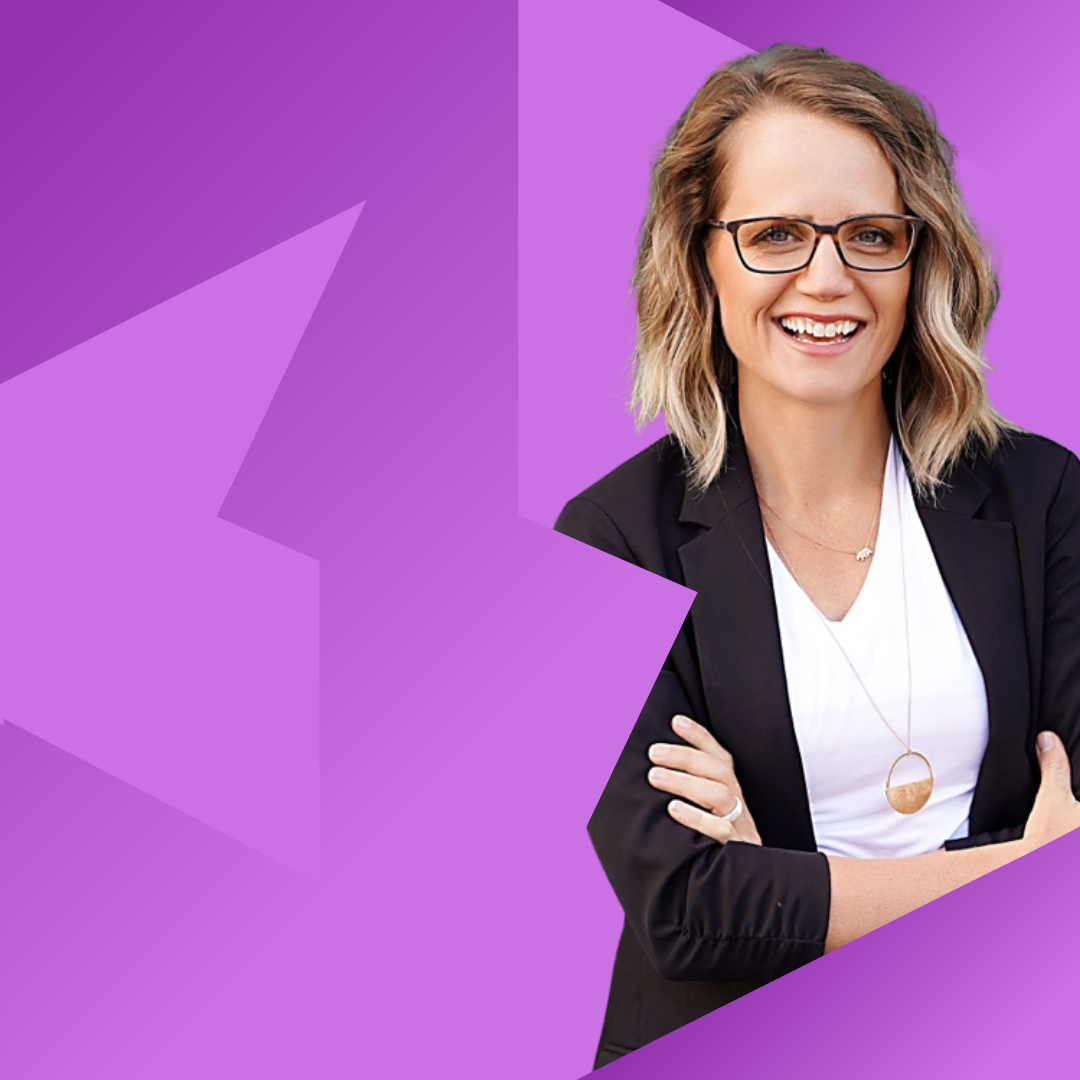
I was fascinated by this one. So here's my conversation with Amanda Schneider.
Chris: Amanda, welcome to the Workplace Geeks podcast. Just to kick us off, tell us a little bit about yourself, and then we're gonna get into your book, we're gonna get into some of the ideas, but just tell us a little bit about you.
Amanda Schneider: Perfect. So I like to say I am a designer by degree, a journalist by accident, and a researcher by choice. Have been in the commercial interiors industry, the interior design industry, my whole career. A little over, gosh, 25 years now, which makes me sound old. I am a mom of three boys, 12, 15 and 17, and I live in Chicago, Illinois, here in the US.
Chris: Lovely. And just tell us a little bit about the professional side. You talked there about design by degree, journalist by accident, and researcher by choice. How does that look in a professional capacity?
Amanda Schneider: My degree is in product design, and I quickly realized that my fascination with product design was not in sketching, but much more on the research side. So my first decade was spent in a variety of different roles, mostly related to product development and A&D sales.
And then I went out on my own in 2011 and founded what eventually became ThinkLab, which is really looking at bridging the gap between interior design and product design. We've done a lot of research for this industry, really looking at how those connections happen, what product manufacturers need to understand about how designers work.
About 2023, we really realized that a lot of the research, a lot of the work that we are doing in this industry, very specific to this industry, really applied to the broader world. So we started pitching to some business publications with some of the insights that we had around Gen Z. That went viral.
We had a viral article in Forbes, followed by the number one article in MIT Sloan Management Review that led to a TED Talk. Well, started as a TEDx Talk that got pulled to the TED stage, now has over half a million views. And very pleased to say this year in 2026, I'm launching my new book, Work for What's Next, that really kind of summarizes a lot of the research that we've been doing in this industry and beyond about where the future of work is headed.
You can imagine it's a big category in interior design, actually one of the largest categories in terms of fees for the interior design giants of design. And that's a little detail I missed there, that I actually sold the business to Sandow, who owns Interior Design Magazine, Metropolis Magazine, same parent company of Material Bank, lots of other media brands that you know and love.
So we have really been able to kind of scale the work we're doing, mostly here in the US, to be perfectly honest. A lot of the research for the book is also here in the US. But very pleased to be launching this book, Work for What's Next, and I think we're gonna get into a little bit of that today.
Chris: We are, but just before we do that, what I found interesting there about that story was that viral nature of ideas. It kind of felt like there was a hunch. You put something out into the world and go, 'Think we've got something on this. We think this is quite interesting. What do you think?' And then, the fact it was in Forbes in the first place, I'd be delighted with that. But to see something then take off, what was that like? Did you have to think on your feet? Did you have to go, 'Right, how do we make the most of this opportunity?'
Amanda Schneider: It really is. And I would love to say that this was my grand plan, and I mapped this out when I was five years old, and I'm just executing to plan. But I have to say my least favorite interview question is, 'Where do you see yourself in five years?' Because who the hell knows, especially with the pace of change today.
So I think what I did really well was kind of go where others weren't. I saw gaps in the market and just really focused on filling those gaps, which sounds super simple. But I think our work kind of exists at the intersection of research and design, so kind of this business and creativity, which a lot of business people can't speak creative, a lot of creative people can't speak business, so when we bridge those gaps, I think it really kind of makes a broader audience.
I also think there's a lot of storytelling. Part of the issue with a lot of data-driven companies is people aren't gonna read an academically written white paper in some cases. Some will. The really, really smart ones will, but we are in an era of people want the headlines, especially as we became part of this media brand.
You didn't have time for the 22-floor elevator pitch. You had to get it into a 30-second elevator pitch. And so I think that discipline of merging this business and design mindset, but also really focusing on the storytelling to get people interested, to make them want to go deeper, is a key part of our success.
Chris: Talking about that design thinking as well, it reminded me of Kirsty Groves, who is someone we interviewed on the pod right back in season one. She's written books about how you can design for innovation. What I really liked about her is that she came from an engineering and design mindset, and I felt like it embedded a discipline for how to unpack and assess challenges and problems. Has that design degree shaped your work as well?
Amanda Schneider: It absolutely has, and I would say it's even shaped the team that we've pulled together. Most of the people on my team today find themselves the most creative business person in the room, but maybe not the most business-y business person in the room, and they find themselves the least creative creative person in the room, but the most business-minded creative person in the room.
So I think it's absolutely about the environments that you create. But what's been interesting is also attracting this whole team of people that think in this, I'll call it a weird way, that I do, to try and connect these worlds through very meaningful storytelling.
Chris: And that comes through. You touch on that story in the book about how you set ThinkLab up with that idea of, well, this work needs to work for me, and let's surround myself by people that want to work in a similar way.
So let's get to the book then. The book's called Work for What's Next: Why Workplace Culture Is Failing And How The Next Generation Can Fix It. Give us the Amazon synopsis. What is this book about and why now?
Amanda Schneider: Absolutely. Let me tie it back to my personal story a little bit, and I would encourage any of your listeners to listen to my TED Talk, because it goes in much more detail here. But I would say long before the pandemic, which was a really big turning point in the world, I think we can all probably agree on that regardless of where you live geographically, it was a pretty big shock and shift in our systems.
But long before that, I was really living some of these challenges myself as I worked into motherhood trying to balance a career. And it made me fascinated by this idea of adaptation. What happens when human needs outgrow the systems and the structures that are built around them?
And then as we started getting into this research with Gen Z, our data really started to confirm it. We were looking at thousands of data points every year, and what I saw was a pattern that we are now operating with analog era rules in a digital speed world.
So to me, this book is all about Gen Z, but also not about Gen Z at all, because it's really looking to them as what we say prototypes for the future. I think the moment that we're in right now as a world, in a lot of different countries probably hitting a little bit differently, a lot of different regions a little bit differently, is we can't go back to the world that we knew before, especially as we catapult forward in this increasingly digital era at increasingly digital speeds.
We can't go back, but we don't quite see what better looks like. And so I think what this book is really designed to do is help people see through the eyes of Gen Z, who, the earliest of Gen Z entered the workforce in 2019, so they may have had under a year in the before, assuming they were traditionally college educated.
So it encourages us to look at them as prototypes, not stereotypes. We're not saying, 'This is what Gen Z wants, so baby boomers, you gotta give everything up.' It's really looking at kind of the same problems that we've had, but with fresh eyes with this Gen Z perspective.
And I wanna just give you one more quick stat, because I love the stats here. If you look at Gallup, they do an employee engagement survey. In 2020, there was an incredible fall off. Understandable. We all understand why that happened, because of all the disruption that happened in 2020. But what most people don't know is actually we've seen subsequent declines for the past two years.
What that tells me is that we're really fatigued. We're still trying to figure out these rules while we're doing the work. You can hear phrases like building the plane as we're headed down the runway. No one's quite agreed on what the next better looks like. So what this book tries to prompt you to do is sit down with your teams and really have some of these discussions, look at the same problems with fresh eyes, and it gives you a lot of tools to do so.
Chris: There was a line straight away I highlighted because for me it sums up this entire discourse in a single sentence. You were talking about generational tensions and said, 'Hybrid work has upended the old playbook. For many, the 9:00 to 5:00 office-only model no longer works the way it used to.' So far, I agree. But then, 'There is no general consensus on what works better.' There was this explosion of a light bulb moment in me. That's part of the problem. We haven't really settled on a model since. It feels like you're saying all these assumptions we thought were baked in aren't. What else isn't? What do we do?
Amanda Schneider: Which is really overwhelming, right? And I think that's one thing I hope to prompt with this book. I don't wanna make it feel like you're swimming in a sea of unsolvable problems. I wanna give people and teams things to try, because when everything feels like it's upended and there's no rules anymore, it's a really hard place to be.
One of my favorite lines, I don't know if you've gotten to this one or not yet, but is we can't solve a how problem with a where solution. And I think that's what a lot of the workplace debates are getting wrong right now. You can relocate the people, but you'll just relocate the dysfunction if we can't figure out the how and really this move forward plan. Like, how do we work best together?
And I think we also get lost in the hybrid debate. Is hybrid work here to stay? Are we back to the office? But my challenge to that thinking is even if you're back in the office five days a week, you are more likely than ever in this digital speed era to be collaborating with colleagues in different offices around the country, around the world.
You're more likely to be collaborating with clients. Some of our data says that the average client, the B2B decision-making team for these large workplace projects, has officially doubled in the last five years. So as we look at all of this, even if you're back in the office five days a week, we still have to figure out this distributed world, because how we communicate digitally, how we build trust digitally, is very, very different than when you're face-to-face breathing the same air.
Chris: And just on that point about the lack of consensus, this draws into the premise of the book where you're talking about prototypes, not stereotypes. A few weeks ago I was at a conference on a future of work panel. A question came in about generations and I'd just had our pre-interview chat, so you were front of mind. I mentioned using future generations to understand what work can be in the future. The next panel was on generational differences and the chair said to the Gen Z-er on the group, 'In the previous chat they were talking about using you guys to test things out on. Do you feel like you're being used?' I remember sitting there going, I don't think I said that. Is that something that's come up?
Amanda Schneider: I have not heard it said in that way, but I will say, if you've read chapter six, it talks about a shadow board. We have something that we call a Gen Z cohort, people that volunteer to be used, as you're saying. They're volunteering to say, 'I wanna help figure out the future.'
This is our third year of doing this Gen Z cohort with these people that have said, 'Sign me up. Put me in, coach. I'm ready to play.' They actually want to be in that role. There's some great research by McCrindle that looks at what good leadership looks like to each generation. And again, we're kind of stereotyping by generation, but it's just categorizing them. And what good leadership looks like to a Gen Z-er is empowerment. So giving them a seat at the table, inviting them in.
They are truly like mirrors. I trust you and you trust me. I will respect you when I feel respected by you. It's a lot of those tools. I think you've gotta give them the opportunity to step up, but in my experience, if given that opportunity, they see it as an honor, not a way of being used.
Chris: And in the interest of finishing off that story, the Gen Z-er actually said, 'No, not at all.' Which is a lovely segue into generational differences. It can get a reaction out of people. Some love talking about it, some detest the whole idea. I've got to confess, I used to work for Leesman and Leesman put a lot of data out saying generations are not the important driver here. It's career stage, it's life stage. However, having spoken to you and started to go through the book, I'm starting to see this now. Talk to us a little bit about your view on the usefulness of generations.
Amanda Schneider: I think the discourse you're looking at, is it generation or is it life stage? I do get this question a lot. I think both are useful lenses. One being useful does not negate the other. Life stage absolutely matters. A 25-year-old today has more in common with a 25-year-old 20 years ago than with a 65-year-old today in many ways.
But I think we're asking the wrong question. It's not do generations matter? I think the question I try to pose in the book is what can these generations teach us about where work is headed, and how can we look across all generations?
Because if you look at this book, it is not looking at here's what Gen Z wants, which, side note, is also part of the trigger most people have around generations because of what we did to the millennials with these stereotypes. We're not trying to look at why they matter, if they matter. It's how does it give us a grounding in data to help facilitate these cross-generational conversations?
And I will say in my experience, generations tell us something that life stage can't. Namely, what world did you grow up learning to navigate? Boomers learned stability. That's the way the world was when they entered the workforce. Gen X learned independence. I'm a Gen X-er. We're called the latchkey generation, right? Millennials learned about globalization. Gen Z is learning continuous disruptions. All of those experiences don't disappear when they turn 40.
If you look at the 25-year-old in 1995, they entered a world of fax machines, long-term employment, and information scarcity. But the 25-year-old in 2025 is entering the world in this era of disruption, AI, hybrid work, information abundance. That's really generations, and that's why this matters.
Chris: There were a couple of lines I jotted down. You put something in there about how different generations can be dissected by how they interpret trust, loyalty and success. For me, success will be different to what my kids deem successful. And the other thing, in terms of why generational differences feel prominent now, is that generations coming through are programmed to challenge stuff. They're learning constant disruption. It comes with, 'Why do I have to do that?' And we go, 'Well, because that's the way it's always been done.'
Amanda Schneider: And they don't have the same assumptions. I love what you said about challenging what success looks like, because I think this is one of the biggest disruptions. Can I tell you a quick story from the book?
Wake Forest University. I originally heard of this story from a friend who was going through freshman orientation with his son. They have been asking the question since the 1950s of how many incoming freshmen feel that you are destined for the C-suite in your job? Since the 1950s, it's been around 25% have said, 'That's me, I'm destined for the C-suite.' Somewhere around 2020, can you guess what happened? It more than doubled.
I wanna say, I'm not quoting these numbers exactly, but I wanna say it's around two-thirds now say, 'It's me, I'm destined for the C-suite.' And as this professor is telling this story to a group of Gen X and Boomer parents, they're all rolling their eyes, like, 'Ugh, sounds like this generation.'
But then he pauses and says, 'Okay, but how many of you have consulted with your kids where to go on vacation?' Half the room, maybe more, three-quarters of the room's hands go up. And he says, 'And how many of you were consulted when you were kids?' And all their hands go down. We've raised this generation to believe they have a seat at the table.
They have more access to the internet. I think access is such a key word, because they have access to things that we simply didn't. If you look throughout history, this is one of the first generations that has this unprecedented access, and it is shifting what's important to them.
They're looking at all of us like, 'Okay, so success looks like that corner office. It looks like that title. It looks like divorce. It looks like burnout. It looks like traveling, being away from your family. It looks like my parents got laid off in their 50s because of downsizing. Like, I'm not signing up for that.'
Another stat in the book says only 6% of Gen Z actually says that they want that. So this is a wake-up call to all businesses. Again, there will be a talent pipeline crisis. And the companies that try to get ahead of this and figure out these next rules to align with the values and what all generations want, I'm not saying throw out the Boomers and look for what Gen Z wants. I'm saying host these cross-generational conversations, get them talking, give them foundations and data so it's not my opinion versus yours.
Chris: Can I just test something out on you? As you were talking through there, it got me thinking about expectation. It's something I'm obsessed with. How are expectations shifting? I was at a CoreNet event in Amsterdam last year and saw a talk called WorkTok, looking at the TikTok subculture of influencers sharing their corporate life. I'm watching them going, 'It ain't like that.' But these videos have been watched millions of times. People are coming into the workforce, rightly or wrongly, with a vision for what it looks like. Is this weighty expectation another dynamic we have to understand?
Amanda Schneider: To me, one of the most critical words is context today, because what you're talking about is they're coming in with a totally different context than what reality is. I have three teenage sons. I talk to them about this all the time. Could you not get a job and go be a YouTuber? Sure, but it's not as easy as those YouTubers make it look.
So is Gen Z coming in with the wrong context? Maybe, maybe not. But what I will say is this applies to all of us today. Imagine you are a global construction firm, and your Amsterdam office is collaborating with your LA office. Both of those offices have different contexts, so you're both coming into that conversation very differently.
One thing we had when we were in an office five days a week working with only those people that were in that office was a shared context, a shared understanding. And so this is another reason to question those rules. It's not just a generational conversation. It is a regional conversation. It's a technological conversation. These new technologies give us new contexts that may or may not be real, and without that proactive discussion to come to a shared starting point and understanding, I don't know how we move forward to find a better way.
Chris: So let's talk about moving forward. In the book you set the scene and then talk about these major shifts that need to happen. There are ten shifts. The first one jumped out at me because it had a new word, and I'm like a magpie. It's phygital. Talk to us about that.
Amanda Schneider: Yeah, it's a very ugly word first and foremost, but it's the idea that it's not physical or digital. It's this blend of the two. It's phygital. Again, we tend to try to debate these. Is it in-office versus remote, when the real opportunity comes from designing experiences that intentionally combine the strengths of both.
One of the core concepts, and this is one of my favorite chapters in the book, chapter seven, really talks about the shift from physical to phygital and blending the two. It's really understanding, again, the context that these generations are coming in from. A lot of what we see is people trying to take things that we knew in the physical world and transition them to the digital world.
Good change management does a lot of things like this, but different. I'll use as an example pricers. We took the physical book that used to be printed, and we would flip through pages, and we put it in these magazine apps that now you can even hear the whoosh, whoosh, whoosh of pages turning. Like this, but different. That's change management for the older generations.
But if you look at these younger generations that operate naturally in a digital-first world, they're looking at that like, 'Why the hell would we do it that way?' Because it's not optimized for how I need to work digitally, which is I need to be able to search. I need to be able to find something quickly. I don't wanna have to flip through 25 pages to get to whatever I'm looking for.
And we can see a million ways that this translates, like from onboarding. Why do I have to wait until the day I walk into the office? That's like walking into the junior high cafeteria, right? My kids, when they're connecting with their friends today, they connect digitally first and then choose where to meet up, and they find each other in the real physical world.
So I think there's a lot of opportunities for businesses and companies and workflows to really take this phygital mindset optimized from a digital-first standpoint, not that change management standpoint, that we're all trying to take things that were very familiar to us and put them in the digital world. But how do these two worlds intersect so that you can seamlessly weave between them?
Chris: Years ago I was dealing with Daniel Rowles, a digital marketing expert, and one of the things he always said to marketers was, with all this powerful technology coming down the line, don't just digitize what you've always done. Take a step back and ask, if we were starting again and these tools were available, how would we do it? It sounds like what you're advocating. Do you think phygital's gonna become even more important, particularly with AI coming down the line?
Amanda Schneider: It's really about intentionality. It's looking at what is best done digitally and what's best done physically. I hear it all the time, face-to-face is best. We need more face time. And I agree, if we're relationship building, we're trying to build that trust, I think you just can't replace what can be done in person.
But I think what I would challenge people to think about is not is this or that better, because in certain situations each one can be. It's what is best done alone asynchronously, what is best done in person and synchronously?
We talk a lot in the book about synchronous and asynchronous work. I think one of the biggest challenges that we're having right now is really the explosion of meetings. Hybrid work especially was really exciting, because at one point we were like, 'Oh man, I can work anytime, anywhere.' But then it quickly blended to we're working all the time and everywhere. There's no cut-off.
And then we went back to the office, and meetings have officially 3X'd since 2020. So now we're trying to bring people back together, more and more face time, more and more synchronous, and what's happening then is now people are waiting until they put their six-year-old twins to bed at the end of the night, and now I'm gonna do all my emails on the couch at night.
So I think we really have to start looking at this very intentionally. When is that face-to-face time best and how do we use it for its maximum benefit? And then when do we use these digital tools, the efficiency, the speed, the focus that you can have? It's not either/or. It's really a yes and, and how do we blend them and make the experience of moving between them really seamless?
Chris: There was a slight uncomfortable truth there when you talked about putting the twins to bed and sitting on the couch, because literally what I did last night. Sat whilst my wife watched Real Housewives of something and I did my emails, pretending not to be interested and then asking her lots of questions about who's married to who.
Amanda Schneider: My husband does the same.
Chris: Let's talk about trusting co-creation. I guess this is really where the Gen Z shadow board you've already talked about kicks in. Rather than six executives in a room going, 'This is what we'll do,' it's let's talk. I'll tell you what I think. You tell me what you think. Let's find something together.
Amanda Schneider: I think trust is one of the foundational pieces, and chapter one really goes into this deeply. Where that came from is we asked a question, what's the biggest challenge with hybrid work? And one of the things that stuck out to me in that data is actually double the number of Gen Z-ers cited trust as the biggest challenge to hybrid work as baby boomers.
You can see across all generations this beautiful bar chart gets bigger. So 12% of baby boomers growing, growing, growing to almost a quarter of Gen Z cited trust as the biggest issue to hybrid work.
And I'm gonna tell you another quick story that I think makes this come to life. It won't surprise you, I am a very social person. Put me in a room in a happy hour, and I can talk to anybody in that room. My sister, I have an older sister, is absolutely the opposite of me. And she was in something called the MUD, which was a digital online world that was before the internet, back when we had to do the dial-up sound.
It was online chat rooms that existed way back then, kind of part of the Dungeons and Dragons world where people would go in there and role play. So she invited me. This would've been back in probably the early '90s. She invited me into a chat room, and I'm like, 'I got this. I know how to talk to people.' I got in there. No one would talk to me. She was the belle of the ball.
You put my sister in a happy hour, can't talk to anybody. You put me in that digital chat room, I really struggled. So I think the way we build connection and the way we build trust digitally is very, very different than the way we build it in person.
And we're so frustrated with this younger generation. 'Oh, they don't have people skills. They're on electronics too much. They've lost that.' Well, guess what? The flip side of that is true. In this increasingly digital world where we are collaborating across offices with clients and other places, that digital body language, a great book by Erica Dhawan, is very, very different, and how we build that trust is very, very different, and most of us of a certain age do not speak digital fluency any more than I did back in the '90s trying to talk to my sister's friends in that ridiculous chat room.
We say Gen Z needs more people skills. Absolutely, probably true. I think that's gonna be the home ec of the future. Instead of teaching them to cook and sew, we're gonna teach them to shake hands, introduce themselves, and make proper change. But I think our generation also needs to learn more of these digital manners and digital trust-building skills that most of us are also not fluent in.
Chris: Yesterday I was at an event with organizers who were a wee bit younger than me. We were looking at timings and they showed me their WhatsApp. After every message they wrote, 'Ha ha ha. He he he.' I couldn't get my head round it, but they were both doing it to each other. Is that like a reassuring thing? Is that what you're talking about, these digital cues?
Amanda Schneider: It's digital cues, it's emojis, it's how you speak in text, but I'll also say it even extends to B2B brands and websites. We tend to want to get someone to a real person, especially in the B2B world with large, complex transactions.
There's a great LinkedIn post that says, 'Imagine if B2C companies did things the way B2B companies do.' Wanna know the calories in this protein bar? Sign up for this hour-long webinar to find out. Does it include peanuts? Click here to talk to an expert.
We laugh about these things, but this is the way B2B brands are still trying to do things because we believe face-to-face is best, FaceTime is best. You need to connect them to a human. Guess what? That is not the way Gen Z works, and every interaction they have with your brand is either building that trust or breaking it down.
In their perception, their context, they expect this radical transparency. If your brand is holding things behind a firewall, making you physically call someone to get to an expert to understand what they believe to be a simple question, that's also breaking trust with your brand.
Chris: So let's use that as a segue. You talk about microcultures in the book, and I thought that was really interesting. We talk about organizational cultures, but actually teams have their own little culture as well. Explain the importance of that shift.
Amanda Schneider: Today we asked a really interesting question. Across all generations, so this is not just a Gen Z thing, people don't experience company culture as much as they experience manager culture. Most employees of all ages feel more connected to their immediate manager than the company itself.
And so what I challenge in the book is rather than talking about company culture from top down, that culture is built from all of these little micro-cultures from the bottom up. I think that managers have become the linchpin and really the bottleneck.
We often promote people for their technical expertise. You're good at engineering, so let's make you the engineering manager. And then we expect them to coach, build trust, lead change, develop people. When I was promoted to my first manager job, I got a binder, like a physical binder that was like, 'Here you go.'
And then you layer in all of these challenges with digital communication and digital trust building as their teams are not always in the office, and some of them are not as fluent in that digital trust building.
So I think the next competitive advantage are these better managers. If you look, going back to that Gallup data that I talk about disengagement and the subsequent fall off, the largest fall off was actually with those mid-level managers. I think it's because they're exhausted.
They're trying to translate up from the people that work directly for them. They know their stories. They see their faces. They have to look them in the eye and say these policies, even if they don't think they make sense. They're translating those policies down to these people, and they're trying to translate those people's needs up.
And also back to life stage, this is typically the life stage where they have the most pressure, caring for aging parents, caring for children, mortgages, you name it. So we're squeezing these mid-level managers at a point when they are the most critical to really recruiting, retaining, and keeping the talent that you care about most.
Chris: I guess what you're talking about is this top-down culture and this bottom-up culture, and quite often they don't align. We spend a lot of time talking about culture. One of my favorite ways of describing culture is the Seth Godin approach, 'people like us do things like this.' Is what you're advocating for almost an embracing of that micro-culture dynamic, as opposed to going, 'We have decided what we're about and you will fit into that'?
Amanda Schneider: I think that's it. But again, we're looking at all this data across generations and how things are shifting towards what we believe is the future. A Gen Z-er trusts reviews from anonymous strangers on Amazon more than they probably trust their mother about what is gonna work or what isn't.
It's much more this crowdsourced, bottom-up culture that they are really accustomed to. And I think this is important for all of us because as AI takes on more of this technical work, human skills like empathy, coaching, judgment, psychological safety, those are all going to be the differentiator. And I think that we have to adjust our approach to how we show up and how we help those people feel connected.
Chris: That's been amazing, Amanda. I really enjoyed it. I wish we could go into more of those shifts. Before I let you go, though, I've got one question to ask you. Where do you see yourself in five years?
Amanda Schneider: My favorite question.
Chris: No, the one thing I did want to ask you is how do you think this debate's gonna develop? Change is the constant, but it seems like the cycles, the pace, the chapters of this change are getting quicker and quicker. Do you think you're gonna have to come back to this book in three years' time and go, 'Right, here's the second edition with all the new stuff we've learnt since,' or do you think the principles have longevity?
Amanda Schneider: My hope is that five years from now, this book feels really obvious. That is my hope. If you think about it, when I was little, there were ashtrays on airplanes. That was just normal and expected. It seems so odd right now. And I hope that the future is kind of like that.
In the future, I think that this office debate is gonna disappear. I always say that, to me, work was a noun. When my dad said, 'I'm going to work,' it meant he was probably taking a physical briefcase, driving to a physical office, and he was going to a noun, work.
When I say I'm going to work with my boys, it's a verb. It means I might open my laptop right here in the kitchen. It might mean I'm going down to my basement office. It might mean I'm going to a coffee shop. It might mean I'm going to a client's office or the Merchandise Mart, downtown Chicago. But it is I'm going to work as in a verb.
So in five years, I don't think we're gonna be arguing about remote versus in-office. I hope by then we're asking much better questions like what work is done best together, what work is done best apart. I think we're gonna stop designing workplaces around where people work and start designing them around how people work. And that gets me really excited about the future because I think there's a lot of opportunity.
Chris: Lovely stuff. And if people are very excited about this chat, where can they find out more?
Amanda Schneider: Definitely start with the book. You can find it on Amazon, Amazon UK. It's really the foundation and brings together all these years of research, these viral articles, and the ten shifts that I believe every leader should be thinking about right now as they look towards the future of work.
The second place I would say you can find us is follow me on LinkedIn. We are just getting ready to go to a whole roadshow all over the US. Unfortunately not international, but you can follow me to find out if I'm coming to a city near you. We'll be traveling across mostly North America, but live podcast recordings, research events, keynotes.
And if you can't get to one of those US cities, follow our Design Nerds Anonymous podcast. We're a top 1% podcast. It's where we really explore this intersection of business and design. This roadshow is going to be unpacking it with leaders, thought leaders in and outside of our industry in very different backgrounds, coming with very different contexts to help us bring to stage some of these conversations that this book is driving around our country. So follow Design Nerds Anonymous wherever you get your podcasts, and you can follow along.
-- OUTRO --
Chris: Well, I hope you enjoyed the conversation with Amanda as much as I did. As I said at the start, I've never been entirely convinced by many of the arguments around generations. Too often, they descend into stereotypes or become an excuse to dismiss people who simply see the world differently.
What I think Amanda has done is something much more useful. She shifted the conversation away from who Gen Z are and towards what they might teach us about where work is heading. Whether you agree with every conclusion or not almost becomes secondary. The value, I think, is in the questions it prompts us to ask about our organisations, our assumptions and the rules that we've inherited.
Do check out Amanda's podcast. We'll put a link to that in the show notes.
Workplace Geeks is brought to you by Audiem. At Audiem we help organisations understand what their own people are saying through written data. Because while it's always useful to understand the wider trends, the most important evidence is the evidence inside your organisation.
If you'd like to learn more, head over to audiem.io. And if you've enjoyed today's episode, I'd really appreciate it if you could follow Workplace Geeks wherever you get your podcasts. It helps more people discover the show and means you'll never miss an episode. Until next time, thanks for listening.