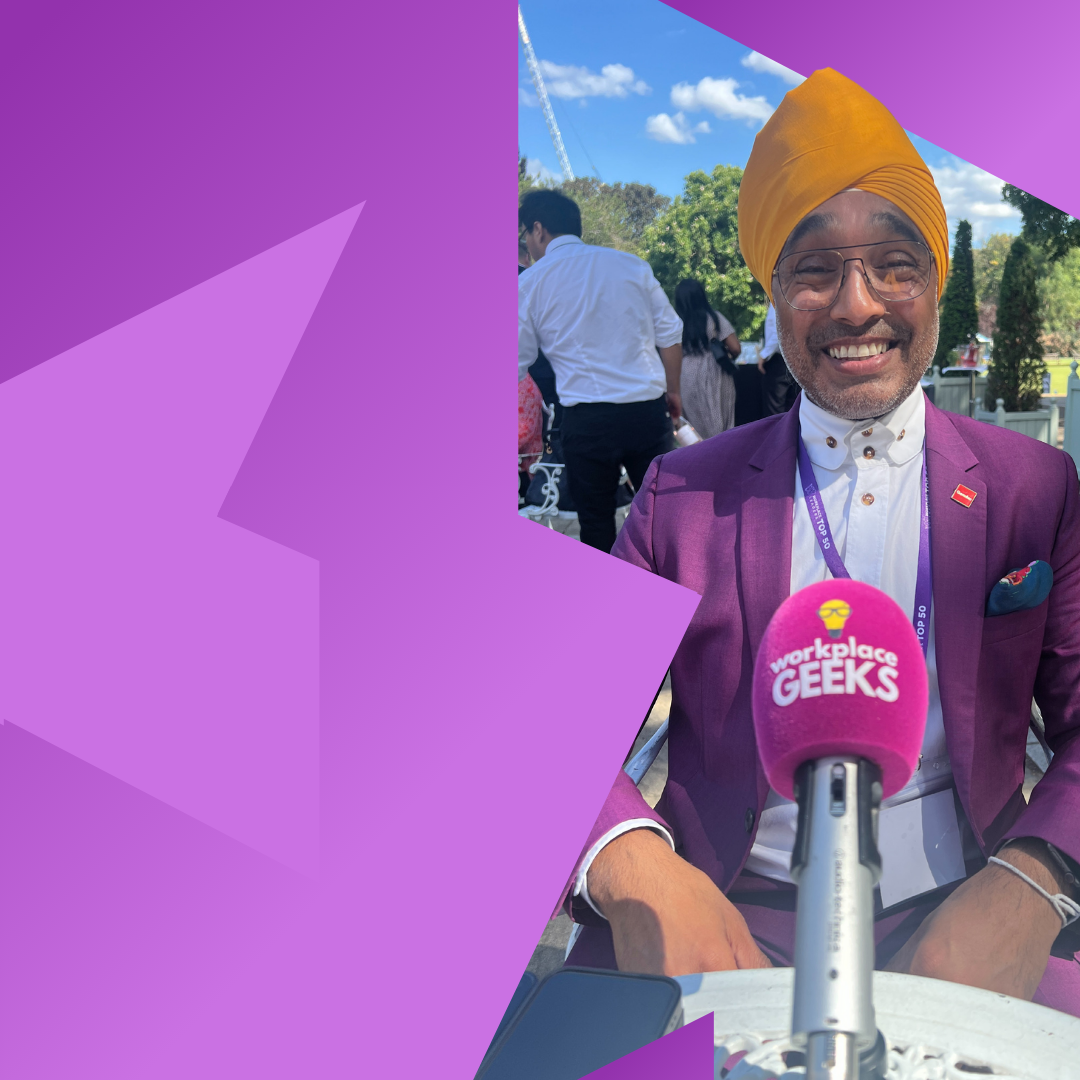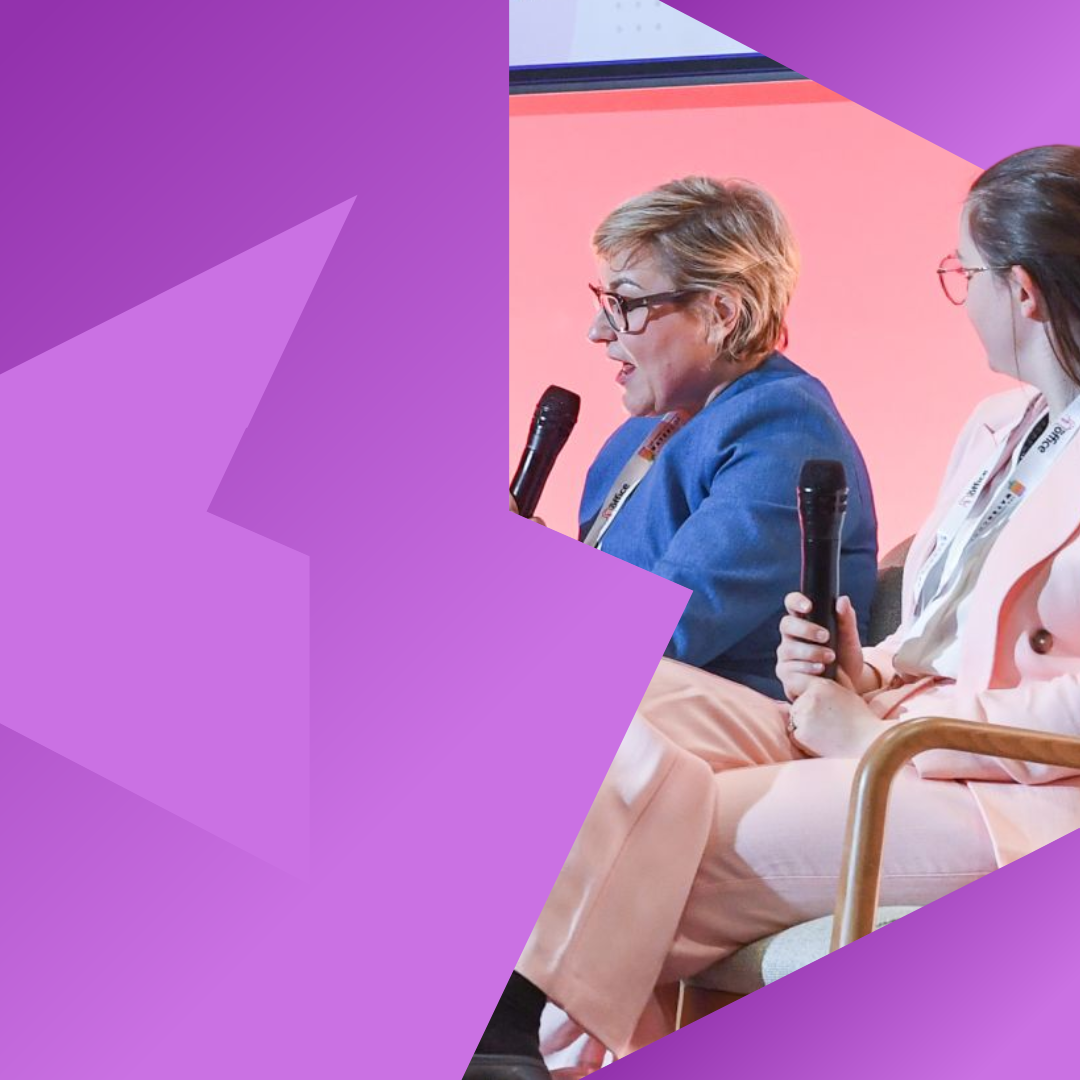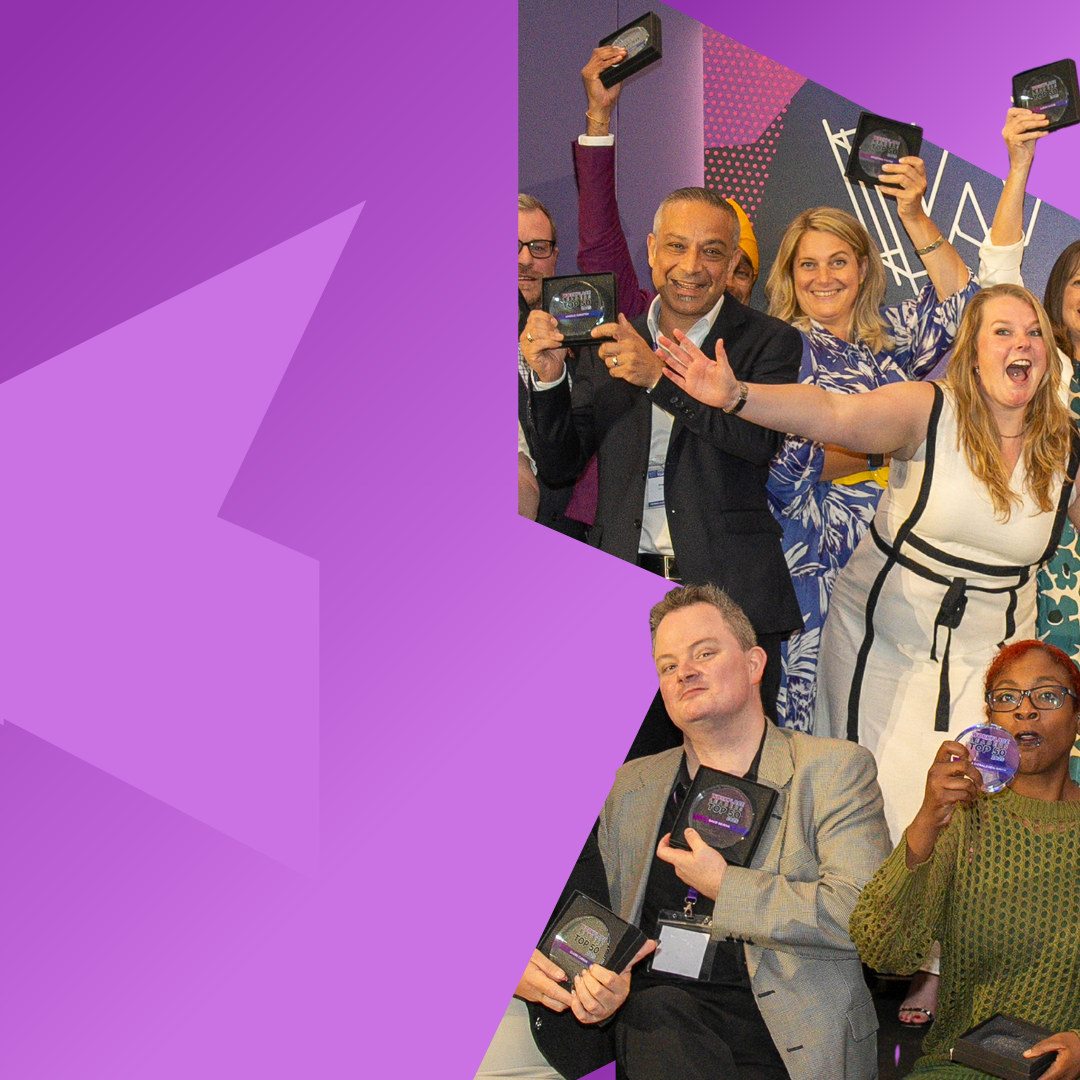

The conversation.
From the psychological contracts of work perks, to the creeping control of mobile devices, and watercooler encounters with hidden meaning, Matt has been making sense of work through verse for years — including a long-standing collaboration with Worktech as their poet in residence.
We invited him on to the show share some of his workplace-themed poems, then discuss what they reveal about work, culture and human nature.
Explore further
We discuss
- What Matt Harvey’s poetry reveals about everyday working life.
- Work perks, small acts of resistance and the unwritten deal between employer and employee.
- How mobile devices blur the boundary between freedom and being always available.
- Watercooler encounters, workplace relationships and the things left unsaid.
- Why promises that technology will save us time can end up creating more work.
Explore further
There are some great videos on YouTube, and some of our favourite books include:
- The Element in the Room
- The Hole in the Sum of My Parts
- Where Earwigs Dare
- Mindless Body, Spineless Mind
- Shopping with Dad
Read the transcript
-- INTRO --
Chris Moriarty
Hello, and welcome to the award-Winning Workplace Geeks, the podcast on a mission to unlock the world's most fascinating workplace insights. I'm Chris Moriarty.
Ian Ellison
And I'm Ian Ellison.
Chris Moriarty
And think of us as your companions on a journey through the everyday stories of the workplace, uncovering the beauty struggle and small triumphs hidden in the routines we so often take for granted.
Join us as we find new meaning between the meetings, the emails, and the coffee breaks. And we've got a few things to update you on today before we jump into our conversation with today's. So let's get through the housekeeping first. So last time out we spoke to Jeremy Myerson and Philip Ross. Great episode and one of our best performers.
In its opening week, I'll have, you know, so I was more than excited to take a look at our bulging mailbag, but, but Ian, what did I find when I got there?
Ian Ellison
Not a bloody jock, Christopher.
Chris Moriarty
Nothing diddly squat. Now, as advocates for improved experience, it would be wrong of us not to consider why that might be the case.
So we're delighted to be launching a brand new feature. The Workplace Geeks Hotline in. Tell Folk more about it.
Ian Ellison
Well, it's kind of like an answerphone for the internet age. You basically click the record button. You can ask us a question, leave episode feedback, share a little workplace story, whatever tickles you fancy.
Really, you can be anonymous. You can tell us who you are. It's totally up to you. Just remember, you've got 90 seconds to do it, and if you fluff it up, you can even rerecord. So don't panic, you are in control. Just remember, we may well feature some of them on the show
Chris Moriarty
like this one that we received from a mysterious but super intelligent sounding listener.
Hi guys. Chris here. Uh, longtime listener. First time caller. Just wanted to get in touch to say wow, what an episode that was with, uh, Philip and Jeremy, especially that bit about the history of the office and it's linked to technology. Uh, so yeah, keep up the good work guys. Speak to you soon. Bye. And we've made it super easy to find.
Most of you will be listening to this episode on your mobile device. Well, once you've listened to it, just hop to the first link in the show notes on your chosen podcast streaming platform, and click the Handy Workplace Geeks hotline link. And Ian, whilst we're at it, you are keen to find out something else, aren't you from our listeners?
Ian Ellison
Sure am. So off the back of our first ever Workplace Geeks investigates where we dug deep into biophilic design. We are busy lining up another investigation episode, so if you didn't listen to the biophilia one, it's just before the start of season four. We had an absolute blast doing it and it's getting some really nice feedback.
The working title for the new episode is the Age of Experience coming later this year, and for that we want to collect as many real experiences about work as we can. Not the stuff that we hear on conference stages, the nitty gritty day-to-day stuff that either delights, disgusts, muses, or perplexes you, the genuine lived experience of work, if you will.
I.
Chris Moriarty
For example, the global VP of Workplace experience at one of the largest financial institutions on the globe told me how frustrated they were that when they get to a door and they're swanky new office, it has a handle on each side, but no signage to tell you whether it's a push or pull,
Ian Ellison
and she gets it wrong every time.
Or the workplace manager of an international insurance firm who had staff who protested about workplace issues by stuffing single shoes, yes, leather shoes, down the U bends of their swanky London office toilets. And I think that's it for now.
Chris Moriarty
So let's get on to today's guest, Ian, let the listeners know who we have with us today.
Ian Ellison
So today I'm really excited. We've got another Workplace Geeks World First and drum roll. It's a poetry takeover. Now, before some of you reach for your phones in protest, trust us. It's brilliant because we are joined in his own words by writer, poet enemy. Of all that's difficult and upsetting. Matt Harvey and Matt's Wordsmithery has taken him from Totnes to the Wimbledon Tennis Championships via Saturday Live, the Edinburgh Festival and the work section of The Guardian.
He hosts Wonder Mentalist Radio Four's comedy infused, musically enhanced interactive Poetry Cabaret and his author of The Hole in the sum of my parts where Earwigs Dare, mindless body, spineless mind, and quite possibly my favorite children's storybook of all time shopping with dad. We met Matt at Worktech London last autumn, and this episode is in some ways the sort of unfolding of a bunch of happy coincidences, which makes me very happy indeed, Chris, I.
Chris Moriarty
Lovely stuff. So no reflection section today. 'cause as you are here, Ian and I reflect on a number of Matt's pieces as we go. So there's also no reflection section guest, but Ian and I will be back afterwards for a quick sum up before we let you on your way. So let's go and listen to Matt Harvey.
-- INTERVIEW --
Chris Moriarty
Welcome to the Workplace Geeks Podcast. Now we are used to having guests on the show that are workplace leaders, workplace academics, workplace researchers, but you are slightly different. So Matt, do you wanna tell everybody who you are and what you do?
Matt Harvey
Thank you. Thanks for having me here. Chris. I am a poet, essentially.
I do various things that arise outta being a poet, but that's essentially what I do when I'm at work Tech. I think I'll build as a poet in residence because I keep coming back and doing it again. But I also write other things. I've been a columnist in one or two magazines and, uh, had a regular slot actually as a poet in The Guardian for a while.
I write lyrics for song cycles and even stage musicals on a good year, and I write kids books. Um, and I, I take all kinds of commissions. I mostly say yes to things
Chris Moriarty
including workplace podcasts. Yes. But I'm gonna make a confession to kick us off with that. That kind of sets the scene a little bit for the path that led you to this podcast.
So Ian and I first saw you, now Ian's got a bit more background, but I first saw you, let's put it, uh, on the stage at work taking, and you've mentioned them there. Where I looked at the agenda and it said opening address from our poet in residence, and my heart sank because I've been to so many of these conferences where they have tried to do something different and quirky and creative, and they have fallen so flat.
It's unbelievable. But in a kind of hero arc, as you started reading your poem, I was totally, totally transfixed and came out of it buzzing because of the, the topic and because of the material, it was so kind of refreshing.
Matt Harvey
Well, the work text stuff came about because Philip Ross heard me on the radio and the, the poem he heard was commissioned by a school in Stoke that had just achieved specialist IT and mathematics status, which was a thing at the time.
They'd commissioned an IT poem and a maths poem from me, and it was called Bit Bite Kilobyte. It's a kind of a nonsense poem, but very percussive and it keeps referencing it. And then random images from my childhood and other people's childhoods, I think. And he liked it. He liked it so much that he called, he somehow got my number of the BBCA and mate that there's some sort of data breach there, but I'm not gonna, I'm
Chris Moriarty
not gonna, well, Philip Ross knows everyone, knows everything.
You can't escape Philip Ross.
Matt Harvey
He probably does. He probably, yeah. And uh, he called me and said, would you like to come to Worktech and, and read this poem? And I asked about, about Worktech, the future of the workplace, et cetera, and said to him, it's not really worth my while coming for one poem, but I happened to have been writing.
Work related poetry in the Saturday work section of The Guardian for the last few years. Why didn't you get me along to do lots of poems and pay me more as a, a result? This is my argument. And, uh, he, he fell for it. He went with it. He went with it rather than fell for. Would you like
Ian Ellison
me to edit the, fell for it Bit out?
No, please.
Chris Moriarty
No,
Ian Ellison
thank you.
Matt Harvey
And yeah,
Ian Ellison
that, that's how it happened. That's really interesting. So the weird thing I think for Chris and I was, we've only been to the last two work techs and you weren't at the 20 23 1. You've got like a 15 year history with them, haven't you? I think that might have been one of the only ones that you weren't at or something like that.
Matt Harvey
It's the only one I've missed in 15 odd years. Yeah. So you're
Ian Ellison
literally the poet in residence.
Matt Harvey
I do claim that mantle, I'd genuinely be quite hurt if they got someone else along. Um, I, sorry. I will be hurt when they get someone else along
Chris Moriarty
after they've listened to this.
Ian Ellison
So now I'm feeling the pressure because with two consummate storytellers facing me on my monitor, I am sort of gonna tell my part of the story now.
My daughter is 12 years old and when she was a toddler and we were doing bedtime stories and stuff like that, I don't actually know how I found it, but I stumbled across shopping with Dad, which is this incredible long form poem. Illustrated beautifully about essentially a sort of catastrophic, dad takes daughter to shops to get a bunch of things.
Dad is largely feckless. There's an accident. The accident causes all sorts of. Chaos in the shop and there's a lovely silver lining saved by decent human nature and the spirit of the daughter really isn't there. And yeah. Yeah. And I absolutely loved it. And I didn't realize that you were in residence. So when I knew we were coming along to work tech again after making podcasts the year before I was fanboying you before I even got there.
So the fact that we are here now is just glorious for me because it's like a dream come true.
Matt Harvey
That's really lovely. That was a beautiful, um, summation of that story. Miriam Latimer is the illustrator for that. She, she's done lots of other wonderful things, but she adds to it. There were little extra jokes in, in her pictures, which I know people have told me.
They'd go back for her and look and see her. It's glorious, but the kids begin to spot them.
Chris Moriarty
Yeah.
Matt Harvey
I was so pleased that you liked that book. And then you showed me, you showed me that you actually sent me a message, you know, time back, way back. And thankfully, 'cause I'm horribly rude to people, I got back in a pleasant way.
Ian Ellison
Well, do you know why I sent you that? Because I felt compelled to prove that I wasn't stalking you because I'm sat there at the conference telling you this story and you are sort of politely smiling and humoring me thinking, is this guy completely nuts whilst text
Chris Moriarty
in security? So
Ian Ellison
I thought, yeah, while sort of hand signals across the room.
So I felt compelled to dig it out 'cause I don't tweet anymore. I haven't tweeted for years. Tweeted what's the past tense of a tweet? I actually managed to message you as it turns out on your birthday, saying This book's fab. It was a picture of my daughter with the book and I said, please, will you write another one?
And you went, well I haven't written another one yet, but DM your address and I'll send you some more poetry. And you did. And I've still got them, but I haven't got that one. 'cause I gave it to one of my best friends. He's got two Japanese sons and I sent it round the world. And that's where it currently is.
Matt Harvey
Great. Great. Oh, that's lovely to hear. Little bit, little bit more detail there Phil. Uh, even better.
Chris Moriarty
So the plan is, today we've kind of looked at some of these poems I guess that have come from your work that you mentioned earlier on in the work section of The Guardian. We've kind of picked a few out that we think are quite interesting and we're gonna gonna ask you to read them and then we're gonna sort of.
Chew the fat over some of the ideas and just sort of expand on them a little bit. But before we get into that, now, I suspect it's my Irish roots, but I've always, always, always been fascinated with poetry. Now, the reason I say about my Irish roots is, of course, poets were held in very high regard in the Irish courts, uh, for holding power to account and, and all the rest of it.
Just reflect for me a little bit on what you think poetry does. That straightforward narrative doesn't.
Matt Harvey
Wow. Okay. We we're gonna need a longer podcast, I think, but I, I'm not that good at being succinct. I've been asked this before and I've answered it differently each time. So I'm, I'm not gonna necessarily gonna stand by these words, but poetry makes a different space.
Sometimes they're like word carvings, and when you have this special language, there's a stronger evocation and a different space is opened up. And often with poetry, people give up trying to understand it quite early on, or if it's really obvious. They just relax into letting it fall into their brain, and the rhyming and the rhythm means it falls into their brain in a much more pleasing way.
I'm speaking just personally, but it has a magical feel. We're going right back to something like Dr. Se, where everything felt magical as it landed in my brain. And because of that, because of this combination of things, there's a different. Uh, relationship with the audience, and if they can bear it, they have to be able to bear it.
Because when you told me that your heart sank when you heard there was a poet, I understand. And I, I often have to get up in front of people whose hearts I can see are quite low. They're quite down, and I'm gonna to try and reach for them and bring them up again. And I, there's a, there's an instant expectation management that has to be done right at the beginning when you're going into any context where people haven't signed up or volunteered to listen to poetry.
Do you remember, you've probably read some time ago, the hitch is going to the galaxy.
Chris Moriarty
I, I think I might be one of the only people on the planet that's never read that. By the way,
Matt Harvey
there's a concept of vo on poetry. They're a very, they're a horrible war-like, uh, species. And one of the, one of the terrible things they do when they at war with you is insist that you listen to their poetry.
And everyone can imagine just how dire that is. And there's a sense in which when you just say poetry, that the p word to most people in most contexts, they hear vo on poetry. And so one's always aware of that. Um, I've kind of veered off there about why I've, I've gone from why poetry is wonderful to why it isn't utterly awful.
And
Ian Ellison
so you also talk about performing, 'cause there's the writing of it and the performing of it. And the thing that I think goes with that is the, it's the window into something you said. It creates a different space. Well, you can imagine using purchase a window to look into that space to give you new reflections on.
Well, the topic that we are interested in is the modern world of work. And I guess that takes me to my question because. Workplace Geeks is fundamentally a podcast about knowledge and research to shed light on work and workplace. And what we're gonna do here is we're gonna use poetry to do the same thing.
If I was gonna use a fancy word, I'd say it's almost autoethnographical. It's you writing from the heart about work.
Matt Harvey
Oh my, I say I have different organs in my body that I write from, and I'm not always writing from the heart. With my work poems, I was often scouring for ideas. And it often struck me as ironic.
I mean, I, I did do various jobs over the years before I became a sort of full-time poet person. Um, but I didn't have any relationship to that, that corporate world in which many people I knew were heading into. We, I've not made a single postman at Worktech and I don't expect to
Chris Moriarty
perhaps as a segue into our, the first, the first piece of work we want to, to get you to read.
I think that's why I loved it. So it was work perks and what I loved about that was it wasn't this highfalutin, lofty kind of stuff that we hear in corporate conferences about the need to collaborate and all the rest. You know, 99% of the people that go to work aren't conscious of work in itself. They're just going to the job and doing the job and hoping they come back a little less miserable than when they set out in the morning.
It's almost like the voice of the everyday employee was in the room with us and I thought that was wonderful.
Matt Harvey
This particular one works Perks that, that we're talking about now. I remember reading a little section of it on the local radio around the time of the expenses scandal. Saying to whoever was interviewing me, they wanted me to be outraged by the expenses scandal.
And I was just more taking the attitude, well, they really do represent us and this is what we're like. We really do feel we, we want something extra. All of us, most of the time, whatever job we're in, and they've got an opportunity to get more expenses and they're taking it. And I think the same, you know, the same proportion of a, the general public would do the same.
So they really are representative. God bless them. You know, so not a very popular view, but people just wanting some extra perks and feeling whatever it is we're being compensated with, remunerated with. We kind of feel we may, we perhaps we deserve a bit more, and even if we don't deserve it, if we can have it, well, who's to judge us?
Chris Moriarty
On that note, then let's, uh, let's have work perks then.
Matt Harvey
Okay. Um, this is just written by a man sitting alone in a room with, with an old Viking catalog.
Chris Moriarty
Just for, for clarity there, is that a catalog of Vikings or is this a brand? Is it stationary?
Matt Harvey
It's stationary. Nothing. Nothing against ing. It's not like a catalog of like
Ian Ellison
helmets
Matt Harvey
and shields and, yeah, yeah, yeah.
Among my best friends have got horned helmets, so works perks. It's just a little thing. I wouldn't call it piling or petty theft. I took one. Yes, but look, there are so many left. I'm in on time. I smile, work hard. Why should my conscience twitch or flinch each working week? You take a yard, so why begrudge me my half inch?
You take the best hours of my day. What do you give me? Take home pay. I'm so tired I can hardly speak. You take the best days of my week. You take the best weeks of my month, I take some paper, this whole punch. You take the best months of my year, I take this swivel chair. Oh dear, you take the best years of my life a laminator for the wife.
So now please look the other way. I need my little takeaway to give myself a token raise to supplement my take home. Praise Some get to meet celebrities or go in junkets overseas. I'm simply taking some of these, some paperclips, some folder files. Puttick stapler. Carpet tiles, some Tip X, a waste paper bin.
This thing for putting thingies in this ream. Okay, this box of reams, this laptop. Wow, you took my dreams. How did it ever come to this? My perky, chirpy, perquisites have been turned into exhibits. These trinkets. I gave house room to exhibits A to W. Don't ask what reason or what rhyme drove pretty me to petty crime.
Nobody's perfect. I guess it built up over time because I'm worth it.
Chris Moriarty
Wow. I just love the rhythm of it because it it, it takes on the new life and it comes off the page.
Ian Ellison
Oh man. Oh man,
Chris Moriarty
love it. It's the
Ian Ellison
wordsmithery for me, it's just the
Matt Harvey
wordsmithery. I don't, because we're actually seeing each other during this podcast.
I dunno if you notice, I've, I've got incredibly short hair at the moment, but I did the blink, you toss of the hair
Chris Moriarty
at the end without, without infringing any copyright issues. Without infringing
Matt Harvey
any copyright.
Chris Moriarty
Just listening to that, again, I've, that poem takes me kicking and screaming right back to my first job in a call center in 2003, where I was surrounded by stationary, right.
Surrounded by stationary. And I dunno, I, I guess in the modern office, that's quite a rare thing now, like, you know, apart from certain roles in certain rooms, but, you know, your average person probably hasn't got a desk tidy, a row of folders and, you know, a, a box of paperclips in the stapler.
Matt Harvey
Oh yeah,
Chris Moriarty
but we did, we used to just, you know, if I had to do some filing at home or something like that, grab a handful of paper clips that'd be useful and all the rest of it.
I wonder if anyone ever did a study about how much was taken and how much it was worth and what, you know, the same way to do that about, um, a sick pay at the minute they're like, this is costing us sex amount works. Perks might have cost us billions in the economy in the past.
Matt Harvey
I wonder, I sure, I'm sure within individual offices that there, there'd be fantastically fastidious people in the office who would do that, who would do, do the regular inventory.
But, uh, whether there's ever been that, what's the word, you know, methodological, scientific study, who knows? I like to think that has been, and that we, we were proved to be every bit as, uh, venal and grasping as our mps were in their own way,
Ian Ellison
venal and grasping. I love it. I remember when my dad, he was for a number of years, a treasurer of a local council, and I remember as a kid, literally put my order in.
I'd say, dad, could I get some of them fluorescent marker thing in me? Bobs and I'd send him with a list and they'd come back with in his briefcase on an evening, sometimes not perfect, couldn't get you the blue sun, haven't got the blue one in. And I've got this kind of vision of him, almost like passing a little piece of paper to his secretary saying, could you just go and sort that out please?
I've gotta deliver the goods when I get home.
Matt Harvey
That feels like a link to some ancient hunt to gatherer foraging past, coming back with it with the goodies.
Ian Ellison
I think more seriously when I listen to that, I mean the obvious one is about the psychological contract at work. You know, you might have a piece of paper which says, in exchange for this work, you get this amount of pay and this number of days holiday, but.
What else is in this transaction? And it's different and it's invisible. And that's the beauty of the psychological contract is a really interesting thought experiment. Because when that is misaligned or when it gets jeopardized, like during a restructure or something like that, and you're at risk of redundancy, you can literally hear them ripping in the air mentally.
And I think identity and mischief at work, they're part of who we are. We're not bad people necessarily, but they're part of who we are. There's something about feeling alive, I think, with a little bit of petty theft.
Matt Harvey
I, I think I agree. There's a, there's a free song, isn't there? There's the extra, I remember, I'm just realizing that at, at the work tech conferences, there are lots of, um, sponsor stalls, exhibitor stools, and everyone's giving freebies away.
And, um, if I go on and do a poem, do make a joke about the freebies beforehand, which would usually be, show something and say, I hope you've got, you know, you've all got one of these. And, uh, and then I'll say, don't worry, I've got two. And I've a little laugh and I'll say, I'm, I'm kidding. I'm kidding. I've got loads.
And, uh, it's a, it's a sort of standard joke for me to make, but it, it goes down well. 'cause people, you know, they totally relate to it. And the sense that part of what we're there, I'm, I'm very like your dad taking things home for my son. In fact, once I went around every single exhibitor stool to, to fit the, all these questions you answer to show you've been around, then you get to go in the drawer for the Apple Watch.
Ian Ellison
Yes.
Matt Harvey
And I took, and I got the Apple What Nice work
Chris Moriarty
swag. I call it swag. And you spot them right? There is something that must be so cooked into our DNA about loving a freebie. And what I like about this poem as well linked to that is that it does start out off with liking a freebie. You talk there, Ian, about your dad and your shopping list for him.
I just, as you said that I realized my mom used to work in a data entry company and used to bring back all the, um, matrix pri printer paper for me to draw on. And like that's, that came out the dark recesses of my mind there all of a sudden, which I guess is links back to what we're saying about how poems can sort of do something that written copied can't.
But what I like about this poem is that is also the escalation of it, you know, and it's this sort of escal, I've just got this image of someone walking out with a hat, like a like 10 carpet tiles underneath them thinking actually that, that'll do the playroom actually, you know, that was going spare here.
And it it, what it gets me thinking about as well. When you link it to something as sort of scientific, as the psychological contract and you know, all that sort of stuff. It kind of makes me think about certain perks that people have got baked into their role, which will be quite glamorous in, in a sense, but some of them might not be, but how difficult it is to almost row back from the circumstances that give them that they're almost like the protection of that.
You know, like, it's like, oh no, I can't do that anymore. And that, you know, that used to be quite a decent way of getting a, getting a pack of two staplers down again, because I, I was responsible for that and all the rest of it. The, the most extreme one is a newer guy who, through one way or another, ended up getting.
The admin job for putting people into the box at Wembley. And And he would, yeah. And, and he was doing nothing untoward. He was very open about it within the company, but he would, like, no one was in it. He is like, can I take my mates in there for, 'cause Tottenham a Tottenham season ticket holder, and they had a whole season at Wembley and he'd said, do you wanna come in and like, watch the game?
So I spent a season in a box watching Tottenham. And, but the, the extension here is he then called me up and said, oh, they've moved it around. Someone else is looking after the box now. And I was devastated. I was like, oh, that was our box.
Matt Harvey
When I was poet in residence at Wimbledon Tennis Club in 2010, they made me have a mobile phone and tweet.
I didn't understand what I was doing or why, but I was just, but. Part of the club, which is an educational establishment. And all the people working there are incredibly enthusiastic. And during the championships they creep through the corridors and down a disused. Um, it's almost like strange gill. And they come through underneath the scoreboard in center court, these little eyes appear.
And this is the old ITN commentary box. Wow. And this is the special perk for people that work at Wimbledon. And I was allowed through one time to watch Andy Murray, uh, dispatch somebody.
Chris Moriarty
Wow.
Matt Harvey
Quite extraordinary. And so the ITN, because they, ITN haven't had, uh, Wimbledon for a long, long, long, long time. But the ITN commentary box was just a little sort of flap that comes up underneath the main scoreboard.
And that's where the staff are secretly watching all the games. And that's their per and if it's ever taken away, the whole place is being burned down.
Ian Ellison
Normalization as well, isn't it? It's like from escalation to normalization. To
Matt Harvey
that free song of of, oh uh, to I'm just having an adventure nicking this and I feel now I feel entitled to it.
Chris Moriarty
And, and if we link that to sort of modern day work, I mean that's in effect. It's what's happened about remote working. Yes. This was quite nice. This is, you know, this is a bit of a perk and now companies are rowing it back and it's very, very difficult. Correct. 'cause you now feel like something that wasn't there has been taken away.
Yeah. Whereas that it was never there in the first place. It was, it was sort of a. Opportunity that then created a thing, right?
Matt Harvey
Yeah.
Chris Moriarty
Um,
Matt Harvey
there's a different relationship because of it and people are having to be wooed. Um, I just, one thing, I almost rejected the write writing from the heart thing, but I realized there are a few lines in this poem that kind of aren't just Viking catalogs inspired, but they do are a bit more from the heart.
One of which is to give myself a token raise to supplement my take home praise. And there's that sense in which this is not feeding me, this is not giving me a sense of self-worth and value. I'm having to give that to myself. And the escalation that you are talking about, Chris, it goes back to the things that you are taking from me as, suppose I'm taking carpet tiles.
You, you're taking my dreams,
Chris Moriarty
you're taking Well, that's what I was gonna say. That was very evocative. That bit. I thought that was a really, amongst all these humorous and very kind of almost mundane kinda statements is. There is that line. There's like, you take the best days of my week, you take the best weeks of my month.
And you know, as someone who's got young children time, you know, and that's, it's not, it's not time in of itself that you're taking away from me from a work point of view, it's time to do something else. I just think it's such a wonderful, kind of an ode to the world of, you know, having to do work, an ode
Ian Ellison
to work, but also a window on human nature, isn't it?
'cause there's so much in there. There's so much in there. It's an ode about what I'm owed.
Chris Moriarty
Yeah, well look at that. You should be a poet, Matt. Good at that
Ian Ellison
radio.
Chris Moriarty
Right. Well let's, should we move on to the next one again?
Ian Ellison
I think so. I think we should go to, not tonight dear, but its full title is not tonight dear.
I've got a blackberry, isn't it?
Matt Harvey
Yeah. Even, even when I wrote it, the Blackberry was on the way out was it? Could tell. But my. Brother-in-law inspired this because I, I sat down, uh, and said, Chris, tell me stuff about work. And he just talked. He had a blackberry at the time, and he talked about the feeling of power it gave him when he first had it.
That sense of being in control, that sense of being able to reach people. And then gradually he realized that it was more about him being available to them and he was still at work when he was no longer at work and that didn't please him so much and he was just beginning to get what I exaggerated in the poem.
Interesting. But it was more about him being available and at its beck and call rather than it enabling him. Started out as predator and he became prey, that sort of thing.
Chris Moriarty
Well, shall we listen to Not tonight, dear.
Matt Harvey
I have a
Chris Moriarty
Blackberry.
Matt Harvey
Your perky pocket, pa, winks and bleeps, you take it to the loop and check your mail.
The handheld power hub that never sleeps. Stay too long, come back, sweaty, glass eyed, pale, but in control you've learned to delegate. Keep cyber tabs on things. Bring far to near. Send spin memos to every wobbling plate. Become the wireless master puppeteer. You'll never, now, not ever quite away, unthinkable to turn it off.
And churlish, your status slips from puppeteer to prey. The gizmos got you by the late, and earlies you are unfailingly available. Resistance is futile. You are enthrall. Have lost rights that were once inalienable are at. Its beck. Buzz flash, wink beep, and call back to the bathroom. Brush wee wash, click wipe. Then sit unblinking, semi catatonic on your online ca meeting and type.
Hi, my name's Matthew. I'm aholic.
Chris Moriarty
This is such a good, this is like someone holding up a mirror and I suspect you get this an awful lot. And I think you even said when we read it at conferences, everyone's like, that's me, that's me, that's, i, I, I can see it in myself.
Matt Harvey
I was really surprised by that. I read this was one of the ones at, at the very first work tech and even I think work was there too, and it got a very good response.
But this one, people related to it very, very personally and they're saying, yeah, that's me. Yeah. And, and not in a, not in a fun way. I kind of resigned. Yeah. It crept up on me and now I've got a problem way.
Chris Moriarty
But do you know what, when I read it, not just the title, but then the subsequent kinda story, it was so vivid for me because I remember sort of, I'm guessing it's gonna be sort of 2007, eight ish sort of time.
I was just in the, in the kinda stages of my early career where I was getting up to kind of middle management, senior management, you know, I was sort of on that path. I was part of the sort of the corporate group I, you know, and the 200 person business. And I remember the day I got a Blackberry, I remember the day I got a Blackberry and thinking, I've made it.
I've made it into the Elite club. And as you described from your brother-in-law. Over time realizing I'm just working more now. I'm just working more. Because at the time I wouldn't have had a laptop, I don't think. So when I left the office, my email stayed there, everything stayed there. I couldn't bring it home and all of a sudden I had it.
And for the first few months you're sitting there and they give you a holster as well, which I think probably led to the appeal. I didn't that getting it out and yeah, let's have a look at my emails, I'm important. And then, uh, thinking, oh, this sucks. 'cause everyone's coming to me partly 'cause they know I've always got my email.
Yeah,
Matt Harvey
yeah.
Chris Moriarty
Oh mate. It's just such a, I think actually. Uh, combining it with taking it to the toilet is a, a very kinda primal, kind of visceral kind of reaction. You go, how bad have we got? We can't even go to the loo now. And, and bearing in mind, you know, we've just gone past Mother's Day and I got my mom a card from, from a, uh, well-known online customized card company that said, had a picture of a guy sat in the toilet saying, this is me whilst choosing your card.
Very good. And I was like, oh no, this is, this is me. But it's, it, honestly, it, it's, it really is for something, it's quite a short poem and it's quite a simple idea, but it's quite powerful really. It's a kind of, is a mirror to, to the status of, of what we've allowed ourselves to, to do with work.
Matt Harvey
Yeah, I haven't read it for some time to be honest.
And I was struck by the resistance is feudal. You are enthrall and struck by what a terrible joke to use feudal in that way. But I know why I did it just because it was harking back to being that time when we weren't quite slaves, but we were semi owned
Ian Ellison
And you paid just for the privilege of Yeah.
Interesting.
Chris Moriarty
Hmm.
Ian Ellison
And you can feel the flip halfway through from being super excited like Chris was to get his new Blackberry to then realizing and the word play the wordsmithery around late and ies. It's just genius
Matt Harvey
as is the title I. I think it's sometimes you give something a title and it's just the working title to help you, you know, identify the, and then it, it gets to stay there.
Ian Ellison
Well, I think the thing for me was you don't need to change anything except the Blackberry word for iPhone and 15, 20 years later, nothing has changed. One of the things that I was gonna say about this is if James Pinder our. Partner co-founder was on this as well. He would now start talking, so I'm gonna do this on his behalf.
He would talk about a book, really famous book from the 1980s by Ruth Cowen called More Work for Mother, more Work for Mother, the ironies of household technology from the open half to the mark wave. And the point is, every innovation doesn't lead to time saving, which is what immediately gets promised.
You know, bill Gates has just said, he predicts that AI is gonna lead to two day working weeks, and Chris and I have just sort of looked at each other before this podcast recording and gone, no, it means more work because it always means more work because it just fills the gaps. When there was no emails, when there was no mobile phones meetings, were people in a room focusing on one thing and not getting interrupted unless the sky was falling down.
And that was the way it is now. We can barely be in the meeting paying attention. Totally
Matt Harvey
agree. I I want to go, I want to find that book. I, it feels more work from other, yeah, more work from other, yeah.
Chris Moriarty
There is a kind of almost dystopian, um, kind of backdrop to this as well, isn't there? Because Ian's right.
You know, you fast forward to now and it's not just work. I mean, when I got that Blackberry, the only thing on it was my work emails. Right? And now my, my iPhone has everything on it. Everything that I possibly do. That kind of idea of not tonight dear. 'cause that doesn't actually feature in the poem, does it?
It's kind of an evocative title and it's, but you could almost see it because the last thing me and my wife do before we go to bed study on lady and gentlemen is check my phone and then plug it into charge. And I promise you. If you looked at us when we woke up, the kids come in and start like, come on, it's breakfast time.
And the rest of it, we get up and we check our phone. It's like, what do we think has happened between those two moments in time? And yeah, it always makes me laugh when people share online and it gets lots of traction, which means a lot of people have it. The mo, one of the most common injuries with your phone, it's when you drop it onto your own face because you, because you're lying in bed.
Yeah. And boosh, oh god, you know, it, it cracks you in the lip or something. So reach that point. It's astonishing. Really. So look what a belter. Well done.
Matt Harvey
Thank you. I've have to, I have become this person as well. I didn't, not only did I have a black breath, I'm not even sure I had a mobile phone at that point.
I was really not interested.
Chris Moriarty
Yeah. Let's get onto our third. Poem third of four. Um, and this one is called, and it's quite a common idea that you hear about a lot of conferences and people, you know, evangelize it an awful lot. We are talking about water cooler moments.
Matt Harvey
We shared water cooler moments every other other day.
Wistful water cooler moments and they can't take them away. Rye, dry looks that had no witnesses, roof full smiles and no in grimaces, I can't prove it, but we shared them and I like to think you cared then that you weren't just being nice to me. You sent memos with your eyes to me and I reciprocated though I may have mistranslated meanings, added meanings missed.
I'm pretty sure I got the gist. We didn't ever action our unmined attraction. We each knew that we shouldn't. So we didn't though we could. It seemed we had an understanding. Oh, that's how I understood it. Till that moment when you winced at me, went halfway to convincing me I'd passed the out of order line and hovered on the borderline between being an embarrassment and being charged with harassment.
And then you merged with marketing. And now to my intense regret, you use the little kitchenette that's times shared with the second floor, a long mile down the corridor. The rests not even history. There never was a You and me though. Might have been so easily. There's a question that's implicit here and I admit I'm begging it.
Okay. The word relationship pudding wise is over egging it. Ray the first stone. Let those who've never wished and wondered, cast it. It was a beautiful speculation. While it lasted,
Chris Moriarty
and I suspect no one has ever in a workplace conference talked about something like this. When they talked about water cooler moments, I don't think they have.
I was reading these last night earlier and I talked about the organization where I got a Blackberry, 200 people, and I, my wife was there. She worked at the same place with me and I said to her, how many people at our place of 200, actually 150 odd people, let's say, how many of them were married? And we went through and there was 1, 2, 3, 4, 5, 6, 7, 8, 9, 10 different married couples.
At this place that we worked at, and that's when I read this again, it goes right back to this, it's almost like a blind spot for workplace professionals in the workplace community that we think water coolers. And we think that what people will do at the drinks machine is talk about innovation and talk about great ideas and something they thought about in the meeting, not meeting their future partner, not flirting or making a friendship, not messing about flirt.
Yeah. Yeah. And again, it's like, what I love, love about this is that you know that there might be a few kind of like sharp intakes of breath when you know, particularly in the modern climate, but this is where, you know, a lot of relationships start, you know, like bumping into each other, meeting each other at work.
Again, I love it because it brings it right down to everyday experiences and not what workplace professionals cook up as a kind of imagined corporate lifestyle. But it's interesting,
Ian Ellison
isn't it, because. So I met my wife at work as well, and it's, it's the standing joke in our ass because she was kind of this powerful middle manager at this point.
She used to wear a little power suit and she would stomp up and down. She she'd like punch me at this point because she did. It's true, but I'm still taking the mick out of her. She's quite short and she had this kind of nineties suit and you could hear her come in because of the shoes she was wearing and she'd stomp up and down the community.
And I was the post boy at that point, like I was the facilities admin support. And one of my jobs was to go and pop a post bag on her desk each day on behalf of the whole community. And, you know, you strike up a bit of crack and dah, dah, dah, dah. I think the interesting thing is if it. Ends happily ever after then that's lovely.
But the problem with work is when it doesn't and one person is really quite uncomfortable with the attention, which is kind of this, right, it never quite says, but it feels like something went a bit wrong. And that person, unless they're transferred, unless they get to work somewhere else, that's a horrible situation Full of perceptions and misperceptions and feeling uncomfortable, isn't it?
Matt Harvey
Oh yeah. I mean, I, I, my feeling about this is part of the intensity of it is the degree to which it's all in his mind. Nothing ever did happen about this, and we can't be a hundred percent sure that she knew that she was in a speculation. Even let alone
Ian Ellison
a relationship. But interestingly, that's the first time you used his by talking about it.
'cause I was reflecting. You wrote it and you are reading it. So it's got a male voice. And perhaps we might argue, and I feel like I'm an incredibly thin ice here, but perhaps we might argue that it's more a sort of male thing. Is this, but objectifying and flirting? I don't, I don't know. I might be very wrong, but it could equally be the opposite direction.
But we, we, we kind of defer to it being male and that's really interesting as well.
Matt Harvey
Yeah, I, I'm not sure if I told you this, but the last one came from my brother-in-law. This actually to my mind, came from something my sister told me, although when I then showed her the poem and said, you know, you told me about that thing and that guy, this is the poem I wrote.
She said, well, it's nothing to do with what I told you at all. So I, I can't remember. I thought she told me something similar to this, but clearly not
Ian Ellison
interesting.
Chris Moriarty
But, but even within that, so take, take away the kinda situationship bit. There is that kind of, those kind of unspoken nods and eyebrow raises and ugh, you know, that you've just come out of a meeting and you, and what that gets me thinking about is some work I did years ago that, um, with a, a Chapman, he was sort of talking about how water cooler moments are always positioned as very positive things, particularly in that kind of innovation moments kind of mindset.
But he said it's, it's also where people have a bitch and a moan, right? It's also that bit when they come out and you go, oh God. And what's lovely about that is almost regardless of what the narrator kind of has in their head about what they, you know, the story they've told themselves that what's happening there is this sense of a kind of, um, shared experience about the, the difficulties of work that, you know, the frustrations with the latest corporate decision, you know, whatever it might be.
And, and they've sort of built a bond almost over, I. Imagined or real a built a bond over, over that kind of, ugh. You know, what's it like, what's it like here?
Matt Harvey
I do, I think people have incredibly meaningful eye contact moments around water cooler and, and the whatever beverages are available. And of course.
You can't really be sure what the content of the icon, you know, for me it was Ryan, us about the latest corporate decision for that person. It's because they know I've always fancied them, even though I don't know that. But you know, I think we bring a lot of intensity to it. Just as we were talking about it, I, I'd never made the connection before, but, you know, one of the most famous office sitcoms as the office and the, the non-relationship until the Christmas special between Dawn and I can't remember his name.
Tim. It was Tim, wasn't it? Yeah. Yeah. Between Dawn and Tim, that if it wasn't for the Christmas special, nothing would ever have happened.
Chris Moriarty
That was the hook, the human hook for that whole series was Dawn and Tim and the will they, won't they?
Matt Harvey
I agree. Yeah.
Chris Moriarty
And everything else, that was just an excuse then to have, you know, the humor around it, but.
We were all watching for that moment, which is why that Christmas special was so epic in the same way. You know, you could link that to lots of the great sitcoms like Gavin and Stacy. Turns out the end wasn't even about them. It was always about Smithy and Nessie, but. You know, a thing called the Office that was just a setting that, that was just happened to be where the story took place.
It wasn't the focus. And I think there's, there's a lesson to be learned there for a lot of workplace professionals that think that it's the hero and it really isn't. It's all the stories that exist in amongst it and that you create. And even what I like about that poem as well is almost like the reason they stop seeing each other is 'cause someone has made a decision about structure.
Yeah. And, and that's changed the, you know, where they are in the layout. Yeah. And that's changed their behavior and. A moment go,
Matt Harvey
it's almost like a geopolitical thing that moves her to another country. Yeah. You can imagine
Ian Ellison
him finding a reason to pop up at the kitchenette, can't you? Then it being really awkward and then it's like, ah, uh, I haven't misinterpreted this.
Chris Moriarty
Oh, now I'm
Ian Ellison
very
Chris Moriarty
embarrassed. I will never see you again. Or is they're laughing and giggling with someone else at a different water cooler, everything, the whole world breaking down for them. I know it's quite
Ian Ellison
melancholy, isn't it? In the end, you end up feeling quite sorry for the guy, even though he was a bit bit of a pest.
Chris Moriarty
So, uh, right. Let's get on to our fourth, which feels to me there's quite a recent one, uh, based on some of the content, but it's titled The World of Work. 20 years on.
Matt Harvey
This was commissioned actually by. Does that mean we've got copyright issues, Chris, or should we put quick call into
Ian Ellison
cashier? No,
Chris Moriarty
I think
Matt Harvey
we'll be alright.
I think, I hope they'd be very happy for me to share it. And, and I, I mean obviously I'll be invoicing them again because of the extra publicity that you are giving
Ian Ellison
royalties, darling,
Matt Harvey
they sent me a booklet that, that had been written in-house about in innovations and changes over the last 20 years. And essentially, this is my response.
I'm kind of paraphrasing. It's almost like this is me trying to do what AI should really be doing for me, but I didn't realize that I could ask anyway, 20 years on when we. The workforce know their place. Offices cubicles At the IT interface. We see buildings grow smarter, start collecting data workers, more smart casual, turn up later, most stay close and glued to screens some roam.
The urban tundra linked by jellybean jelly, led by tech and by text tricks change was not brisk for. It was checked by management inertia, aversion to risk and mistrust of the word metrics. It took a virus to rewire, to lead us into lockdown masks, answers to questions. No one thought to ask Whose presence is essential?
Who's more ornamental? Two years of Zoom and normal service does not presume to be resumed. Not all the lockdown request readmittance, some resign and the rest are at best. Intermittent unwritten rules have been re unwritten. Now it's less my way of a highway. It's more Tell us about your way. Oh look, here's a doorway.
Let's see where it leads. A post pandemic paradise that understands your needs. When we refurb an interior among our top criteria, efficient eco elegance, emotional intelligence, and indoor growing area, and a come hit cafeteria. Every modern edifice has corners, crannies, crevices, where green fingered employees can grow leafy herbs and lettuces.
This boosts wellbeing, resilience. It's evidence, it's valid, it isn't. Rocket science though could lead to rocket salad. And remember, so they feel important and uniquely. Irreplaceable Wages may be dormant, but their job title's inflatable. Meet Darren Awesome avatar of data and Baria Noble, Baroness of bandwidth.
For these, our thanks are owed to on a matter, Peter Nomenclature, adventurer, and taker in chief of Liberties with Language up a I. Here comes AI texts. Prime directive post-infection is enabling connection. AI chatbots know that that's what makes us human units tick. We know deep in our bones and atoms, that's where the good stuff happens.
When human meets with human. We've been rattled, stirred, and shaken in the crazed covid kerfuffle. But whatever steps we've taken, voluntary shuffle, evolutionary leap, the metric that most matters is the company we keep.
Chris Moriarty
That whole bit there about the virus that rewires the essential and ornamental, I thought was really, really on the nose by the way.
I thought that was brilliant. But it's, it's been talked about so much and retalked about, and revised and people post rationalizing all the rest of it. I kind of felt this as a kind of a, almost like poking fun at the, the nonsense of what people are all talking about. Particularly when you got into the kind of the, the job titles and stuff that everyone's sort of coming up with.
But the thing that struck me the most, and you actually touched on it in the trade to this poem, is the almost meta topic here of ai, you know. AI for a period. The fashionable thing to do was to ask it, to write poems, wasn't it? To almost demonstrate the, the creativity.
Matt Harvey
People kept sending me them. They kept sending me AI and for a while they really weren't very good.
Then they got better and I stopped reading them.
Ian Ellison
Nick Cave got really annoyed about music lyrics, didn't they? He was like, stop doing it. It's insulting. Interesting. Yeah,
Matt Harvey
yeah, yeah.
Chris Moriarty
I suppose the thing that strikes me immediately is you sent a very traditional kind of document, right? A report, and you've got to turn that into stuff.
Like what, what's the process for that? Do you, do you sort of read through it? Do you pick bits and riff off that and try and anchor it?
Matt Harvey
That one, I didn't read it in great detail. I skimmed through it and I was looking for which bits I wanted to do a bit of a dive into which bits I felt were really key, and also I looking for.
Parts I could sum up in a couplet if you like. There was something of, of an old English language exercise back when you did English language O level in my deal. GCSE, where you paraphrased. And I was trying to say it absolutely as succinctly as I could and then allow myself little moments when I expanded just 'cause I thought it was funnier or the language is more interesting.
Ian Ellison
It's one for the workplace managers, it's one for the facilities and the estates managers. Is that one, I guess if the sort of, the process was, you got a kind of a formal document which exemplified the sorts of things you've been commissioned to write about and then you kind of creatively flipped it. I guess it's kind of gonna be for that audience, but what sort of res, what sort of response did that get?
What sort of discussions or questions did it provoke?
Matt Harvey
Well, strangely enough, I. The one I'm, the work tech I missed was the one where I would've read that. Ah, and it was written maybe post second lockdown. I remember having to record myself and then send, send a recording of it. Um, maybe it was that because I couldn't be there.
I can't quite remember, but I didn't get to read this live, so I didn't really get that much feedback. Does that mean this was, its
Ian Ellison
first ever, is this its first ever vocalized outing then?
Matt Harvey
No, it's not because I made more, more than one recording to, to send for them to deploy it as they saw fit, whatever context.
Reading it again, I'm struck in the last section. Um, text prime directive is enabling connection. I dunno if that's true at all. I think that's very much wishful thinking on my part. This is what I would like to be true. And I maybe that was there in the document.
Ian Ellison
I am almost certain it was there in the document, because that is one of the narrative truths if you think about it.
That is the. That is Facebook's modus operandi. The movie about Zuckerberg in the early days of Facebook was called The Social Network. Yeah. That is still their mission and it's fascinating. I think what you are talking about there is the unintended consequences and the unwritten rules that then fall out of things despite what gets preached.
Chris Moriarty
I, one thing and, and it kind of links to what we talked about earlier on about why certain forms of writing have different impacts and stuff. Is that what you've got here is a report that I should imagine would've been I No. 20, 30 pages? Not sure. Right, and what you've just read is 341 words and it's. It started a conversation and it's got us thinking about thing and you can sort of see the shape said, well, it's not, there is the detail, what's not there is the kind of a stat to do it or justify the thing it, you know, it could be red hot opinion, not anchored in fact.
So I get that there's an element to to that that you've gotta be careful of. But I just, I'm sitting there wondering if right now there's an exec listening brave enough to walk into a boardroom and to read a poem and say, look, I can give you last quarter's report. I can give you my workplace strategy moving forward, but I'm gonna do it as a poem.
Buckle up and almost take them through it and engage them and go, right now I'm gonna go back and talk to you about detail. 'cause one of the things we do with the work that we're involved with, which involves a lot of data, is to sort of say, you can't just show people numbers. You've got to tell them a story and, but, but poetry's a way of going, I think a step further, which is almost like I'm going to.
Visually paint a story for you as opposed to just tell you what numbers go where
Matt Harvey
it is a bit more like that. It is a about, you know, it's, it's just one other step away from doing a dance. It's, it's, um, you know,
Chris Moriarty
oh, I wouldn't, I wouldn't advocate for that. I think that's probably a step too far in the
Matt Harvey
book, but, yeah.
No, I, I get what you're saying and it's, it's a way, again, this thing about, I think I talked about making a space, hopefully it evokes more feeling than it does a sense of, oh, that's, that's a very interesting thing. I'll remember that. It's not really about the information that it gives, and if it does give information, it does it in a certain way.
That, um, puts a lot of emphasis on just on the, how things feel when they land. And so then there might be a little bit of pleasure or savor or just a r you know, there's a cheekiness, there are little jokes in it personally, just reading it again, uh, unwritten rules have been re unwritten for some reason.
Gives me great satisfaction. It feels like a very cheeky thing to write, and it's sort of, there's a half rhyme with admittance and intermittent, so you're allowed that, that echo of the sound and then to rewrite something that was never written in the first place. I find it very pleasing.
Ian Ellison
It takes us all the way back to works perk, doesn't it?
That, that I now view staying at home as a Right, as opposed to a perk working from home.
Matt Harvey
Yeah. You, you're quite right. The assumptions have shifted. We never said what they were, but we noticed that they've shifted.
Chris Moriarty
Yeah. And we've got, and we've got the ump about it. Thank you very. Yeah. I'm gonna need something welcome.
That thing that's never been articulated, I think we need to un we're
Matt Harvey
going back now too. You have to have a come here, the cafeteria trying to lure you in. I love that. I love
Chris Moriarty
that. Do you know what I love about the come hit the cafeteria? Is that, um, so many people are now sort of talk about magnets and all this sort of stuff, and I'm like, no, actually what we're all talking about is the come, hit the cafeteria.
So, um, uh, if it, with, with your permission, I think I might, I might drop that into a few conversations. Uh, go for, but look, look Matt, this has been a real joy and I hope, and I'm sure that our listeners have enjoyed us taking a slightly quirky route through the world of work and, and just getting behind some of the thought processes and how these things come to life, um, has been delightful.
So thank you so much for joining us.
Matt Harvey
Really enjoyed being on your podcast. Thank you for having me.
-- REFLECTION SECTION --
Ian Ellison
Chris first ever poet on workplace geeks. Super relevant, super interesting. I thought, what did you think?
Chris Moriarty
Well, I, I kind of want to echo what I said to Matt and I'm glad I said it to Matt because I would hate to have spoke to him and then said it here without him hearing it firsthand. But I do remember sitting at that work tech event and just thinking, oh God, what have they done?
They've brought a poet on, this is the last thing I need, and just being like, beautifully surprised by how brilliant, interesting, witty, like a genuine use of the word witty. I think people say witty all the time, but this is witty, right? Um, I loved it and I loved every second of it. I do like poetry generally.
It's just, uh, I've never really seen it done as well as Matt for combining. Two things that I kind of separate. You know, like I kind of see poetry as a kind of lovely creative force on one side of my brain and the world of work as a kind of day job on the other side of my brain. And he's sort of brilliantly brought the two things together.
So I, uh, no, I really, really, really enjoyed it.
Ian Ellison
Yeah, me too. It was hard for me not to get a little bit fanboy because of the relevance to this book that me and my daughter used to read for bedtime sort of thing, shopping with dad, but putting that to one side, just a really creative, thought provoking way to crack open different ways to see work.
And you kept coming back to it in the episode, taking it from the perspective of the people just trying to get work done, just trying to get by, just trying to be happy and content. And all of those things coming together and then the sort of things that then they have to navigate because of management and workplace professionals and all of that stuff.
Chris Moriarty
I, I kind of guess that articulates why I think I enjoyed it because so often on these conference stages we talk about big ideas and big things and themes and designs and concepts and models and data this and data that. The one person who's never in those conferences is the employee, the regular run of the mill, Monday to Friday, nine to five employee, and Matt's kind of their voice, you know, even if he wouldn't probably proclaim to be their voice, he represents a way of just stopping you in your tracks and hearing a story and that, you know, it was interesting when he talked about why he thinks poetry does that better than someone reading out a.
A diary entry or whatever it might be. It is that kind of lyrical, musical, rhythmic kind of way of getting a message in, puts you in the shoes of these people and goes, right, hold on. We sometimes, sometimes we probably just need to get over ourselves.
Ian Ellison
And keep it simple. Yeah. I think the workplace profession and professions in general probably need to touch more of that.
There's a paper that James and I used to teach with, and it's all about the imagined user in project management. And what that means is, it's a funny title here, a bit like a virtual user or a, a user that doesn't exist. The point that this, this piece of work tries to make is that for workplace professionals, designers, architects, project managers, very often they have an image of who the people are they're designing for, and if they haven't got close to them to understand what real life is like.
Actually they're designing based on a bunch of preconceptions and, and that's where the trouble starts because we have all these grand visions that work should be activity based and it should be this, that, and the other. Knowledge workers. Come in all sorts of shapes and sizes, but the minute we say knowledge work, everybody goes, oh, stroke a beard.
Knowledge work. And I think what you get with Matt and other poets and other satirists and somebody like Lucy Kellaway who used to work for the Financial Times talking about work, is you get a good dose of reality with a bit of cheek and lip, not that sort of full critical management theory academic stuff, which basically says this is all exploitation of workers and whatnot.
But, but something which says, hang on a minute. Look, we are all subject to this. This is real life. How do we make it better?
-- OUTRO --
Chris Moriarty
Absolutely. And that's all for today. So in keeping with today's theme, his little poem about the final bits of admin to remember, as our episode draws to a gentle close, we leave you with thoughts and a challenge to pose.
I. Head over to LinkedIn. Come join the debate in the Workplace Geeks Group. It's never too late, or hashtag it boldly. Hashtag Workplace Geeks where insights and questions are welcome each week. Prefer something quieter. An email will do. hello@workplacegeeks.org. It's waiting for you. And if you've got musings too big for a tweet or a challenge or a story, you're dying to speak, check the show notes below.
We've opened a line. The Workplace Geeks Hotline is ready to shine. You're right for now, Matt, your job's safe, right? Speak soon.